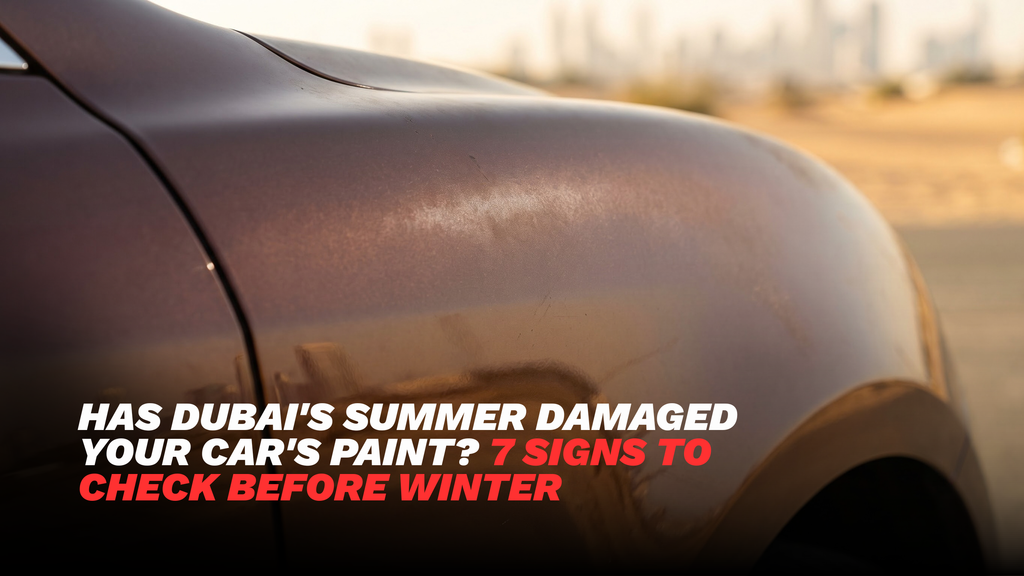
Car paint damage Dubai drivers notice after summer includes fading, swirl marks and water spots. Learn when detailing, polishing, ceramic coating or PPF helps.
Your car has spent months dealing with Dubai’s summer. Long hours parked outdoors, intense sunlight, high temperatures, airborne dust and regular washing can all affect the appearance of your vehicle. The exterior isn’t the only area affected, as understanding how Dubai heat affects your car can help drivers identify other heat-related issues involving tyres, batteries, fluids and vehicle components.
Now that September is here, it may be time to take a closer look at your car’s exterior. Does the paint look slightly dull? Are there fine scratches visible under sunlight? Do water spots remain even after washing?
These changes aren’t always obvious until you inspect the car closely.
Car paint damage in Dubai can develop gradually, and understanding the early signs can help you decide whether your vehicle needs a simple wash, professional detailing, paint polishing or additional protection.
Here are seven things worth checking after a long summer.
1. Your Car’s Paint Looks Dull or Has Lost Its Shine
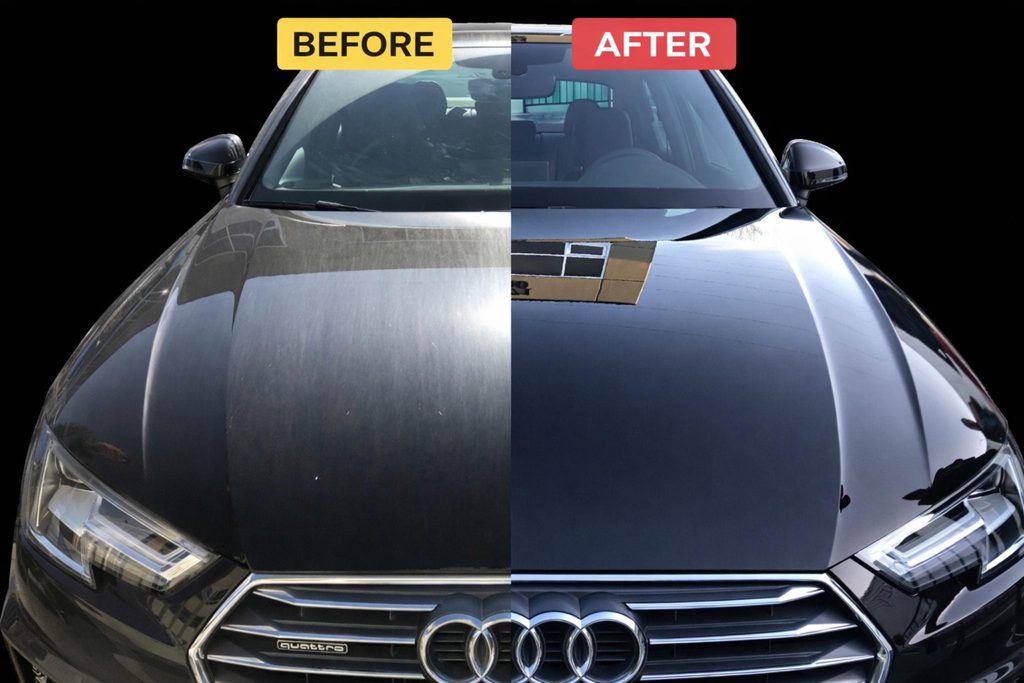
Remember how glossy your car looked when it was new?
If the finish now appears dull or cloudy, the problem may involve surface contamination, fine scratches or deterioration of the paint’s outer layers.
Modern automotive paint typically includes a protective clear coat over the colour layer.
Prolonged ultraviolet exposure can contribute to the deterioration of automotive finishes over time, although the rate depends on paint quality, age, previous repairs and maintenance.
What can help?
Professional detailing can remove bonded surface contamination, while appropriate machine polishing may improve certain defects within the clear coat.
However, polishing cannot restore clear coat that has already peeled away or failed completely.
A professional paint inspection is important before recommending a treatment.
Knowing when your vehicle needs car detailing and polishing can also help distinguish between surface contamination that needs deep cleaning and paint defects that may require correction.
2. You Can See Swirl Marks Under Direct Sunlight
Have you noticed circular, spiderweb-like marks on your car’s bonnet or doors?
These are commonly called swirl marks.
They become particularly visible under strong sunlight or direct lighting, especially on darker vehicles.
Swirl marks are fine scratches that may develop through:
- Improper washing techniques
- Dirty wash mitts or cloths
- Abrasive dust particles
- Incorrect drying methods
- Repeated contact with contaminated surfaces
Dubai’s dusty environment makes careful washing particularly important.
Can polishing remove swirl marks?
Many light swirl marks can be reduced or removed through suitable paint correction, depending on their depth and the condition of the clear coat.
Deep scratches may not be safely removable through polishing alone.
A professional assessment helps determine what level of correction is appropriate.
3. Water Spots Remain Even After Washing
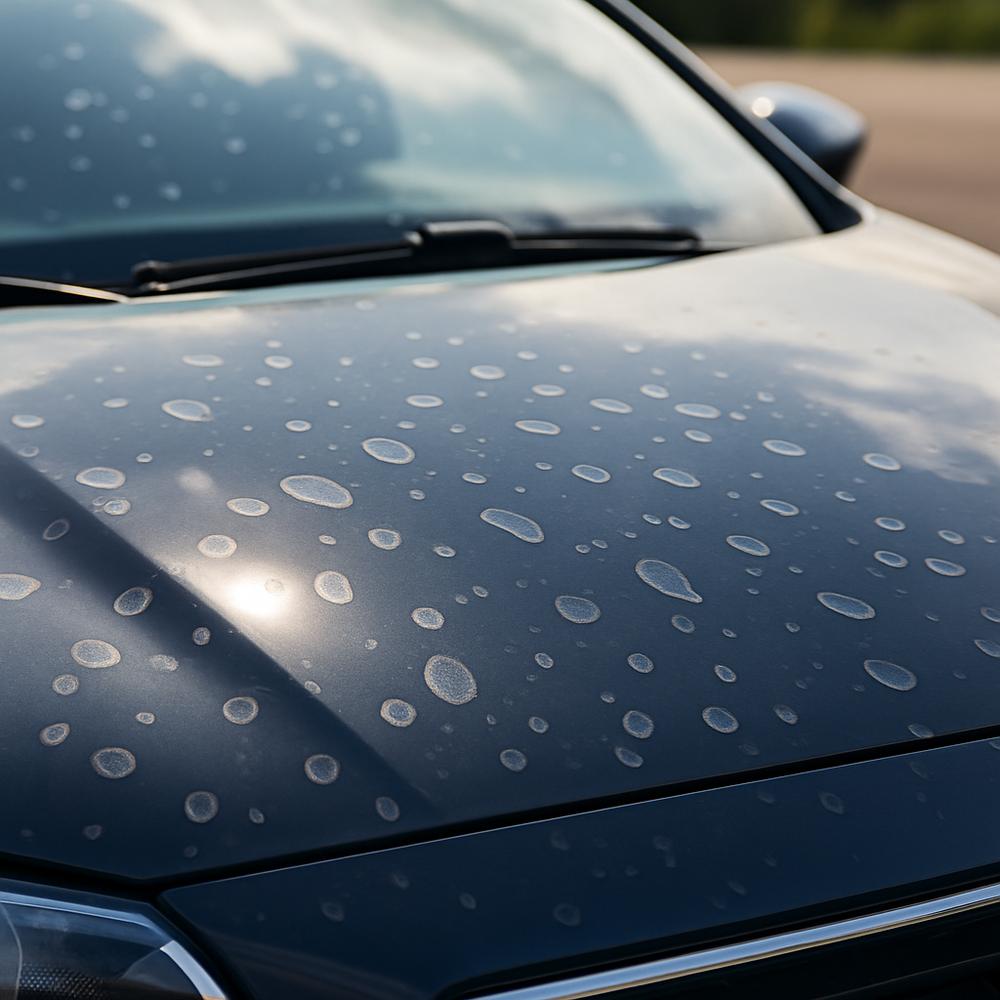
You wash your car, dry it and expect a clean finish.
But once the surface dries, circular marks remain.
These may be water spots caused by mineral deposits left behind when water evaporates.
Water spotting can become more noticeable when a vehicle is washed in direct sunlight or water is allowed to dry on hot panels.
Depending on the deposits and how long they remain, some marks can be removed through suitable cleaning or decontamination. Others may require paint correction.
How can you reduce water spots?
Wash the vehicle in the shade where possible, use appropriate automotive cleaning products and dry the surfaces promptly with clean, suitable towels.
A well-maintained ceramic coating can make cleaning easier, but it does not make a car immune to water spotting.
4. Bird Droppings or Insect Marks Have Left Stains
Bird droppings are more than an appearance problem. They can contain substances that damage or mark automotive finishes, particularly if they remain on the paint for extended periods.
On hot panels, contamination may dry quickly and become more difficult to remove safely. If you notice a stain after cleaning away bird droppings, it may indicate surface marking or etching.
What should you do?
Remove contamination promptly using a suitable automotive cleaner and a gentle technique. Avoid scraping dried material off the paint.
If a visible mark remains, a detailing specialist can assess whether polishing may improve it.
5. Your Car Feels Rough Even After Washing
A clean-looking car does not always have a completely clean paint surface.
Over time, tiny contaminants can bond to the clear coat.
These may include:
- Road film
- Industrial fallout
- Airborne particles
- Tar deposits
- Other environmental contamination
As a result, the paint may feel less smooth even after a regular wash.
Does this mean the car needs polishing?
Not necessarily.
Professional paint decontamination may be sufficient to remove certain bonded contaminants. Polishing is a separate process used to correct suitable paint defects. A proper detailing process should assess the paint first rather than automatically recommending aggressive polishing.
6. Small Stone Chips Are Appearing on the Bonnet or Bumper
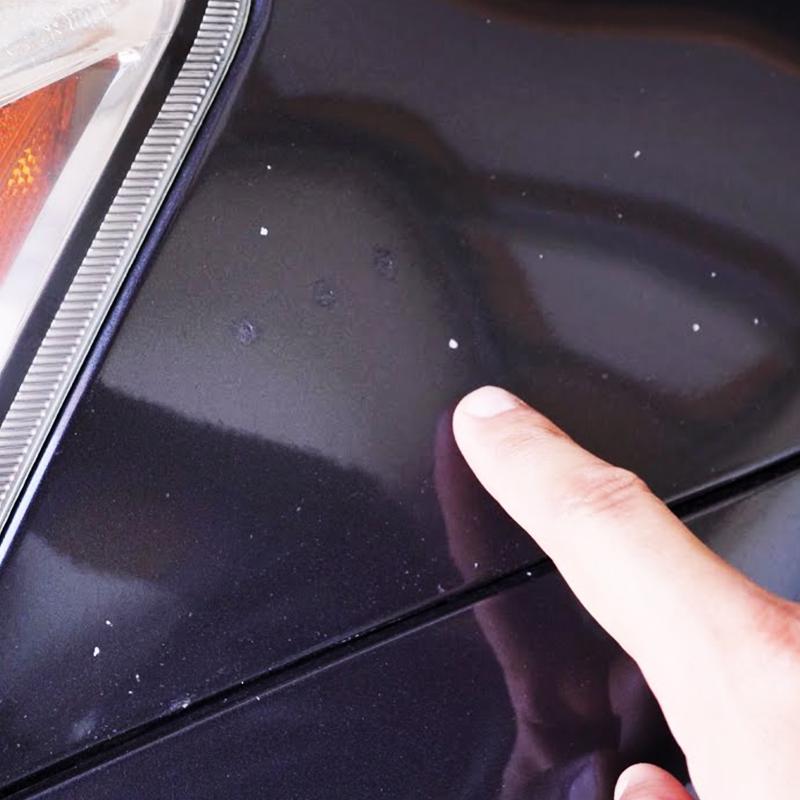
If you regularly drive on Dubai’s highways, you may notice small chips on the front bumper, bonnet or other forward-facing panels.
These can occur when stones and road debris strike the paint. Unlike surface contamination, stone chips involve physical impact damage.
Understanding the difference between PPF and ceramic coating can help you choose the right type of protection depending on whether your priority is impact protection, easier maintenance, or preserving the appearance of the paint.
Can ceramic coating prevent stone chips?
No. Ceramic coatings are not designed to provide the same impact protection as paint protection film.
Paint Protection Film (PPF) is a transparent film applied to selected painted surfaces to help protect against certain stone chips, abrasion and minor surface damage. Protection varies according to film quality, thickness, installation and the severity of the impact. For drivers concerned about highway debris, PPF may be worth considering for high-impact areas such as the front bumper, bonnet and side mirrors.
Note : Automotive film manufacturers also design PPF to protect automotive paint from stone chips and scratches, as well as damage from road debris and other environmental exposure.
7. Your Car Gets Dirty Again Almost Immediately After Washing
Does your car look clean when you leave the car wash, only to appear dusty again soon afterward?
Dubai’s airborne dust makes keeping vehicles clean an ongoing challenge. No paint-protection treatment can prevent dust from settling on a car. However, the condition of the paint and the protective products applied to it can influence how easily certain contaminants are removed. A properly prepared and maintained ceramic-coated surface can offer water-repellent properties and make routine cleaning easier.
It still requires washing and ongoing maintenance.
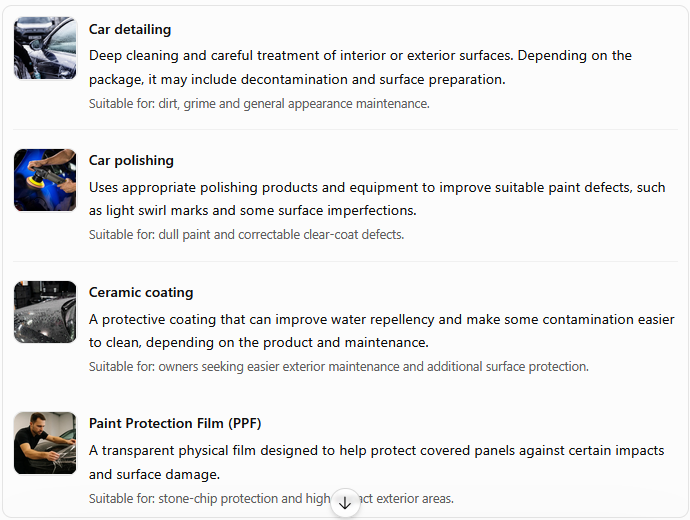
Detailing, Polishing, Ceramic Coating or PPF: What Does Your Car Actually Need?
These services are often discussed together, but they perform different functions. Understanding the difference can help you avoid paying for a treatment that doesn’t address your actual concern.
Should You Polish Your Car Before Applying Ceramic Coating?
Not every car needs extensive polishing before ceramic coating.
However, the surface should be properly cleaned, decontaminated and prepared according to the coating manufacturer’s instructions.
If swirl marks or other correctable paint defects are present, paint correction may be recommended before applying the coating. Once the coating is applied, existing defects may remain visible underneath it. This is why a professional inspection and preparation process matters.
Is Ceramic Coating Worth It After Dubai’s Summer?
Ceramic coating may be worth considering if your priority is maintaining the paint’s appearance and making regular cleaning easier.
Potential benefits of a suitable, professionally applied coating include:
- Water-repellent properties
- Easier removal of some surface contamination
- Additional resistance to certain environmental contaminants
- Improved gloss, depending on paint preparation and product
- Reduced effort during routine washing
However, ceramic coating is not scratch-proof, stone-chip-proof or maintenance-free.
The coating’s performance and lifespan depend on the product, application, exposure and maintenance. If your main concern is physical impact from road debris, PPF addresses a different protection need.
A professionally applied hydrophobic ceramic coating can also help repel water, dirt and environmental contaminants, making the vehicle’s exterior easier to maintain.
When Is PPF Worth Considering in Dubai?
PPF can be particularly relevant for drivers who want to protect selected painted panels against road debris and minor surface abrasion.
Areas commonly considered for coverage include:
- Front bumper
- Bonnet
- Front wings
- Side mirrors
- Door edges and other vulnerable areas
The appropriate coverage depends on the vehicle, driving habits, budget and the owner’s priorities.
For example, a vehicle frequently used for long highway journeys may have different protection needs from a car mainly used for short urban trips.
PPF and ceramic coating can also be combined when the products are compatible and installed according to their manufacturers’ instructions.
A Simple Post-Summer Car Paint Checklist
Before deciding which treatment your car needs, inspect it in good lighting.
Your exterior inspection
1. Look for dull or faded-looking paint.
2. Check the bonnet and doors for swirl marks.
3. Inspect the paint for water spots and stains.
4. Look for stone chips on the front bumper and bonnet.
5. Check whether the paint has bonded contamination.
6. Inspect previously repaired or repainted panels.
7. Assess whether the interior needs deep cleaning.
If you notice peeling clear coat, deep scratches or exposed metal, a detailing treatment alone may not be sufficient. The panel may require paint repair.
Give Your Car the Right Care After a Long Dubai Summer
Your car’s exterior is exposed to sunlight, heat, dust and everyday road contamination throughout the year.
A post-summer inspection is an opportunity to understand its condition and decide whether it needs cleaning, paint correction or additional protection.
The right treatment depends on the problem. Detailing helps restore cleanliness. Polishing can improve suitable paint defects. Ceramic coating can make maintenance easier. PPF helps protect covered surfaces against certain physical damage.
At QuickPro Auto Services, we provide car detailing, polishing, ceramic coating and paint protection film services for drivers looking to maintain and protect their vehicles.
Whether you drive an everyday car, family SUV or premium vehicle, our team can assess the condition of your car’s exterior and recommend suitable treatment options.
Refresh and Protect Your Car at QuickPro
Give your vehicle the attention it needs after months of summer exposure.
Services: Detailing | Polishing | Ceramic Coating | PPF
Al Quoz 3, Dubai
056 805 6000