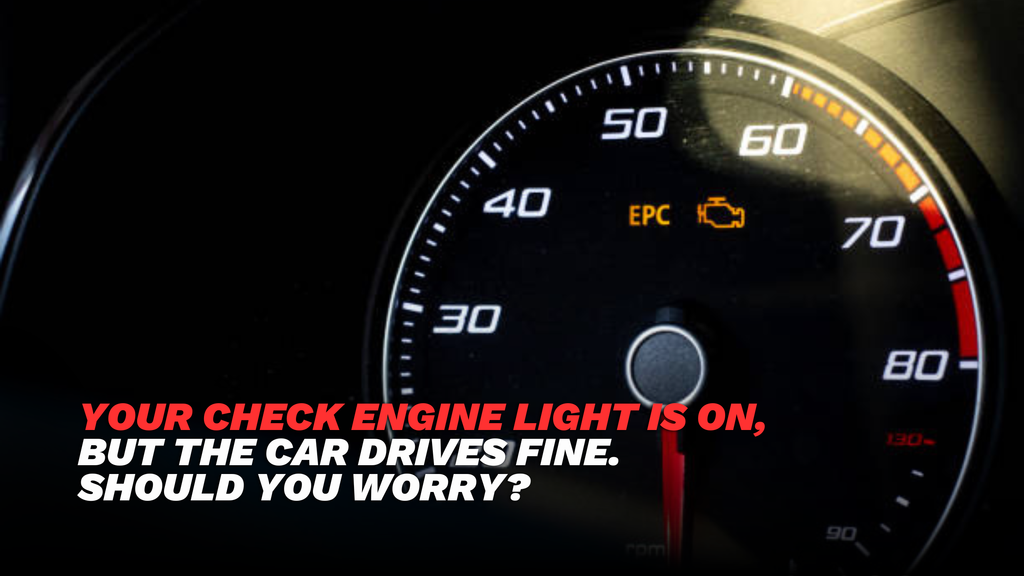
Check engine light on but car runs fine? Learn common causes, what a steady or flashing warning means, and when to book engine diagnostics in Dubai.
Imagine starting your car in the morning and noticing an orange engine-shaped warning light on the dashboard. You check how the car feels. The engine starts normally, the acceleration seems fine, and there are no unusual noises. You drive to work without noticing anything different.
So why is the Check Engine Light still on?
A check engine light on but car runs fine situation is more common than many drivers realise. The warning doesn’t always mean your engine is about to fail, but it does mean the vehicle’s onboard diagnostic system has detected something that needs attention. The challenge is that some engine and emissions problems develop long before they become noticeable while driving.
Here’s what the warning could mean, when you should stop driving, and how proper diagnostics can identify the actual problem.
What Does the Check Engine Light Actually Mean?
The Check Engine Light, sometimes called the engine management light or malfunction indicator lamp, is part of your vehicle’s onboard diagnostic system. Modern cars use sensors and electronic control systems to monitor engine operation and, where applicable, emissions-related components.
When the system detects certain faults, it can store a diagnostic trouble code and illuminate the warning light. Depending on the vehicle and the problem, the light may indicate an issue involving:
- Ignition and combustion
- Fuel delivery
- Air intake
- Engine sensors
- Emissions-control components
- Other monitored engine-management systems
Important: A Check Engine Light is a warning that something needs investigating. It is not a diagnosis by itself.
The same warning light can appear for many different reasons.
Why Is My Check Engine Light On if the Car Drives Normally?
Some vehicle faults do not immediately affect the way a car feels.
For example, an emissions-related sensor may detect an abnormal reading even though the engine continues to deliver normal power. A small vacuum leak might also be compensated for by the engine-management system, making the symptoms difficult to notice initially. In other cases, the problem may only appear under particular conditions, such as cold starts, acceleration, highway driving, or prolonged idling.
This means a car can appear perfectly normal while its diagnostic system has already identified an issue.
Let’s look at some possible causes.
1. A Loose or Damaged Fuel Cap
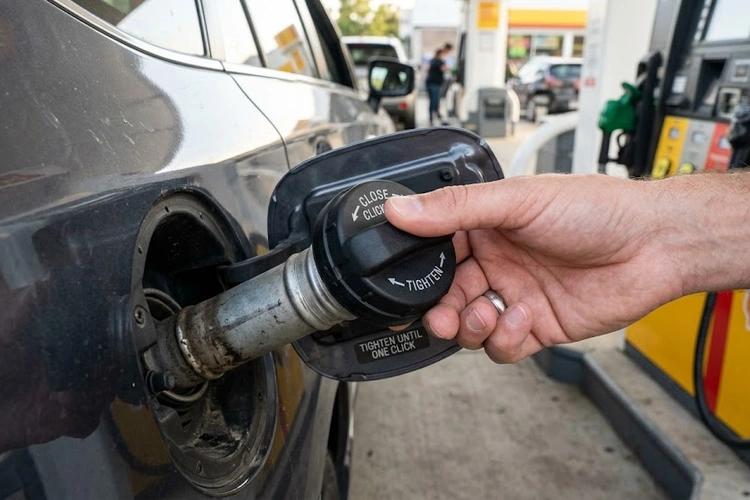
On vehicles equipped with an evaporative emissions system that monitors fuel-tank sealing, a loose, damaged, or incorrectly fitted fuel cap can sometimes trigger the Check Engine Light. The evaporative emissions system is designed to prevent fuel vapours from escaping into the atmosphere.
If the system detects a sealing problem, it may illuminate the warning.
What drivers can check:
If your vehicle has a removable fuel cap, make sure it is fitted correctly and tightened according to the manufacturer’s instructions. However, not every vehicle uses the same fuel-cap design or diagnostic system, and not every warning is related to the fuel cap.
If the light remains on, arrange a diagnostic inspection rather than assuming the cap is the cause.
2. Oxygen Sensor Problems
Oxygen sensors monitor oxygen levels in the exhaust gases and provide information used by the engine-management system.Depending on the sensor and its location, this information helps the vehicle control the air-fuel mixture or monitor catalytic-converter performance.A faulty sensor, wiring issue, exhaust leak, or another underlying problem can trigger an engine warning.
You might not immediately notice any change in performance.
However, some faults can eventually contribute to:
- Increased fuel consumption
- Poor engine performance
- Emissions-related problems
- Rough running in certain conditions
A diagnostic fault code can help identify which system requires investigation, but further testing may be necessary before replacing a sensor.
3. A Small Vacuum or Air Intake Leak
Your engine needs a controlled amount of air to operate efficiently. If unwanted air enters through a cracked hose, damaged seal, intake gasket, or another leak, the engine-management system may detect an abnormal condition.
A small leak might not produce obvious symptoms immediately.
As the problem develops, you may notice:
- Rough idling
- Fluctuating RPM
- Hissing noises
- Hesitation
- Increased fuel consumption
- Check Engine Light
When the source of an air leak isn’t visible, professional smoke test diagnostics can help technicians identify hidden leaks in suitable intake and vacuum systems.
How are hidden vacuum leaks detected?
Some leaks are too small or difficult to access for a simple visual inspection.
A workshop may use diagnostic equipment and, when appropriate, a smoke test to identify leaks in suitable intake or vacuum-system components.During a smoke test, controlled smoke is introduced into the system so technicians can locate the source of a leak. This can be particularly useful when a warning light is caused by an air leak that isn’t immediately visible.
4. Spark Plug or Ignition Coil Problems
Spark plugs and ignition coils are responsible for helping ignite the air-fuel mixture inside a petrol engine.
If an ignition component begins to fail, the engine may experience an intermittent misfire.
At first, you might not notice anything unusual. The problem may only occur under certain driving conditions or become noticeable when accelerating.
Possible symptoms include:
- Engine hesitation
- Rough idling
- Reduced acceleration
- Increased fuel consumption
- Engine vibration
A developing misfire should be investigated because severe or persistent misfiring can damage the catalytic converter. If the Check Engine Light starts flashing, do not treat it as an ordinary warning. A flashing light can indicate a serious fault, including a misfire that may damage emissions-control components.
Understanding the causes of car engine misfiring can help drivers recognise why ignition problems may lead to rough idling, reduced performance, and an illuminated Check Engine Light.
5. Catalytic Converter or Emissions-System Problems

The catalytic converter helps reduce harmful pollutants in a vehicle’s exhaust.
Your vehicle’s diagnostic system may detect that the converter is not performing as expected.
However, a catalytic-converter-related fault code does not automatically mean the converter itself must be replaced.
Other problems, including exhaust leaks, sensor faults, fuel-mixture issues, and engine misfires, may need to be investigated.
A proper diagnosis should identify why the fault occurred before recommending a repair.
6. Mass Air Flow or Other Engine Sensor Problems
Modern engines depend on sensors to calculate the correct fuel delivery and control engine operation.
Depending on the vehicle, these can include:
- Mass Air Flow (MAF) sensor
- Manifold Absolute Pressure (MAP) sensor
- Oxygen sensors
- Engine temperature sensors
- Other engine-management sensors
If a sensor provides incorrect information, the engine-management system may detect a fault.
Sometimes, the car continues to drive normally because the system can compensate for certain problems or operate using substitute values.
However, the underlying issue still needs investigation.
Replacing a sensor based only on a fault code can be an expensive mistake if the actual problem involves wiring, air leaks, or another component.
Steady vs Flashing Check Engine Light: What’s the Difference?
This is one of the most important things drivers should understand.
Steady Check Engine Light
Arrange an inspection promptly
A steady light generally indicates a detected fault that needs diagnosis.If the vehicle drives normally and there are no other warning signs, you may be able to drive cautiously to a nearby workshop, subject to your owner’s manual.Avoid unnecessary journeys and don’t postpone the inspection.
Flashing Check Engine Light
Stop driving as soon as safely possible
A flashing light can indicate a serious problem, such as a severe engine misfire.Reduce power demand, pull over somewhere safe, and switch off the engine. Arrange roadside assistance or recovery rather than continuing to drive.
Follow your vehicle manufacturer’s specific warning instructions.
Warning-light behaviour varies by manufacturer and model, so always refer to your vehicle’s owner’s manual. A steady light should also be treated urgently if the car develops severe shaking, significant power loss, overheating, or other serious symptoms.
Can I Drive With the Check Engine Light On?
The answer depends on the type of warning and how the vehicle is behaving.
If the light is steady, the car feels completely normal, and there are no additional warnings, a cautious trip to a nearby workshop may be reasonable if permitted by the manufacturer’s instructions.
However, a car that drives normally is not necessarily free from mechanical problems.
Do not continue driving if you notice:
- A flashing Check Engine Light
- Severe engine shaking
- Significant loss of power
- Engine overheating
- An oil-pressure warning
- Smoke or a strong burning smell
- Unusual mechanical noises
Stop somewhere safe and arrange professional assistance.
An oil-pressure warning or overheating warning can require immediate action even if the Check Engine Light is not flashing.
What Should You Do When the Check Engine Light Comes On?
A simple checklist for drivers
CHECKLIST PROGRESS
Check whether the light is steady or flashing.
Notice any changes in engine sound, acceleration, temperature or vibration.
Look for additional dashboard warnings, especially oil pressure or engine temperature.
If your vehicle has a fuel cap, check that it is secured correctly when safe to do so.
Consult the owner’s manual and arrange professional diagnostics promptly.
Avoid disconnecting the battery or clearing the fault code simply to switch off the warning light.
Doing so can erase useful diagnostic information without repairing the underlying problem.
Why Does the Check Engine Light Come On and Then Disappear?
Sometimes, the warning light turns off by itself.
This can happen when the vehicle’s diagnostic system no longer detects the fault under the conditions required to keep the light illuminated.
However, the original problem may still exist.
For example, an intermittent ignition fault or sensor problem might only occur when the engine is hot, under load, or during certain driving conditions.
Stored or pending diagnostic information may still help technicians identify the cause.
If the warning repeatedly appears and disappears, arrange an inspection rather than waiting for it to become permanent.
Can Dubai’s Heat Cause the Check Engine Light to Come On?
Dubai’s high temperatures can place additional demands on vehicle cooling, electrical, and engine-management systems.
Heat may expose an existing weakness in a sensor, electrical connection, cooling component, or another part.
However, the Check Engine Light should not automatically be blamed on hot weather.
Other common driving conditions in Dubai include:
- Long periods of idling in traffic
- Frequent AC usage
- Highway journeys
- Dust exposure
- Repeated short journeys
These conditions may influence vehicle operation, but a diagnostic inspection is required to determine why the warning appeared.
A fault code should be interpreted in the context of the vehicle’s actual symptoms and operating conditions
Why a Diagnostic Scan Is Better Than Guessing
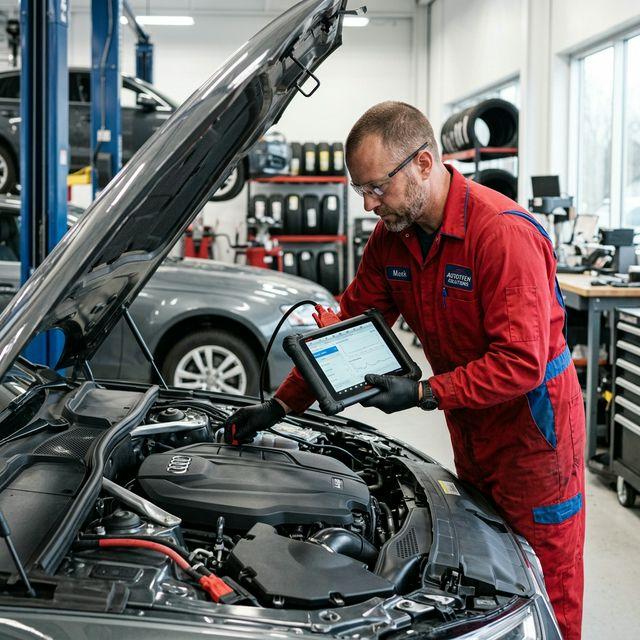
When the Check Engine Light comes on, the first step at a workshop is often to connect a diagnostic scanner to the vehicle.
The scanner can retrieve stored diagnostic trouble codes and other available information.
However, reading a fault code is not the same as identifying the failed component.
For example, a code indicating that the engine is running too lean could be related to:
- A vacuum leak
- An intake-system problem
- Fuel-delivery issues
- Sensor or wiring faults
- Other engine-management problems
Replacing an oxygen sensor simply because it appears in a fault description may not solve the problem.
A proper diagnostic process can include:
- Reading fault codes and freeze-frame information.
- Reviewing relevant live engine data.
- Inspecting associated components and wiring.
- Testing ignition, fuel, or air-intake systems as appropriate.
- Performing a smoke test if a suitable system leak is suspected.
- Confirming the repair and checking whether the fault returns.
The objective is to find the root cause rather than repeatedly replacing parts
Will the Check Engine Light Turn Off After Repair?
Often, yes, but the exact process depends on the vehicle and the fault.
Some warning lights turn off after the system completes the required checks and confirms that the fault is no longer present.
Other situations may require the technician to clear stored fault codes after completing the repair and appropriate testing.
The important point is that the warning should not simply be erased without addressing the underlying issue.
A successful repair should resolve the cause, not just remove the dashboard warning.
How Can You Reduce the Risk of Check Engine Light Problems?
Not every engine warning can be prevented, but proper maintenance can reduce the likelihood of certain faults developing.
Useful habits include:
- Following the manufacturer’s servicing schedule
- Replacing spark plugs at the recommended intervals
- Maintaining the correct engine oil and fluid levels
- Inspecting air filters and intake components
- Addressing rough idling or hesitation early
- Investigating unusual fuel consumption
- Repairing known engine and emissions faults promptly
Regular servicing also gives technicians an opportunity to identify deteriorating components before they create more noticeable problems. Understanding the consequences of skipping regular car servicing can help drivers recognise why timely inspections and maintenance matter for long-term engine reliability.
Don’t Ignore a Warning Just Because Your Car Feels Fine
A Check Engine Light is easy to dismiss when your car still starts, accelerates, and drives normally.
But the warning may be identifying a developing problem that hasn’t yet affected the driving experience.
The cause could be relatively straightforward, or it could involve an ignition fault, sensor problem, vacuum leak, fuel-delivery issue, or emissions-system fault.
The safest approach is to understand the warning, watch for additional symptoms, and arrange proper diagnosis.
At QuickPro Auto Services, our technicians investigate Check Engine Light warnings, engine misfires, vacuum and intake leaks, sensor faults, and other engine-performance problems using appropriate diagnostic procedures.
We service everyday cars, family vehicles, SUVs, commercial vehicles, and premium and performance vehicles.
Check Engine Light On? Get It Diagnosed at QuickPro
Find out what’s triggering the warning before it develops into a more serious problem.
Al Quoz 3, Dubai
056 805 6000