
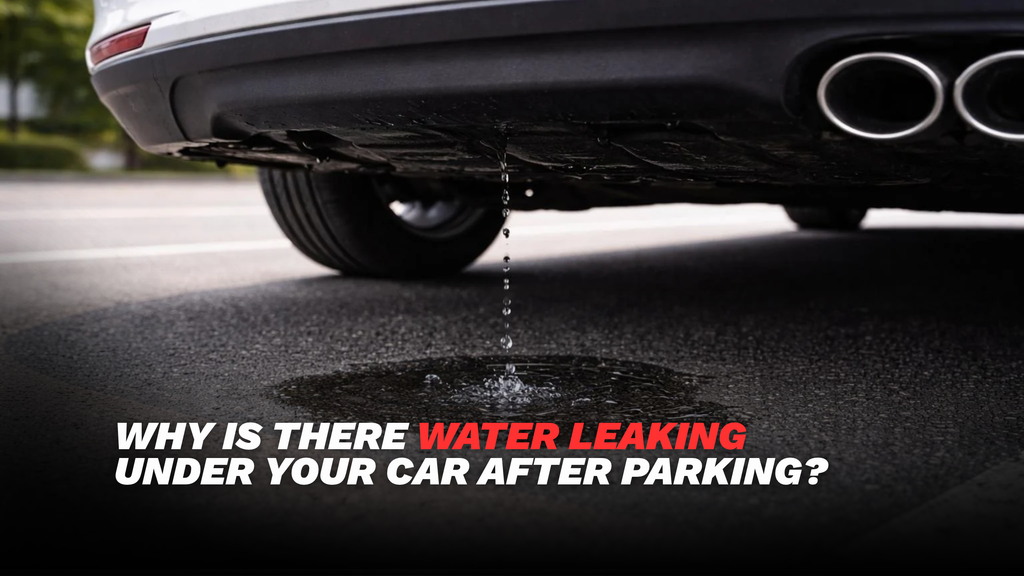
Water leaking under car after parking? Learn when AC condensation is normal, how to identify coolant leaks and when your vehicle needs inspection in Dubai. You park your car, step outside, and notice a small puddle forming underneath it. Your first thought might be, “Is something leaking from my car?”
For many drivers, finding liquid beneath their vehicle is enough to cause concern. Is it coming from the engine? Is there a problem with the radiator? Could it be an expensive repair?
But here’s something worth knowing.
Not every puddle underneath your car means something is wrong.
In Dubai, where air conditioning is used almost every day, water dripping underneath a vehicle can be completely normal. However, there are also situations where what looks like water could actually be coolant or another automotive fluid that needs attention.
So, how can you tell the difference?
Let’s look at the common reasons why water appears underneath a parked car, what you can safely check, and when it’s time to visit a workshop.
1. Why Is There Water Leaking Under Your Car After Parking?
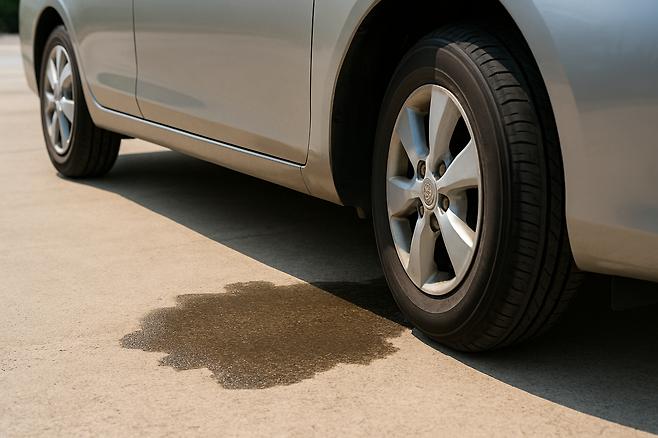
There are several possible explanations for liquid appearing underneath your car after parking.
Some are completely normal, while others may indicate a problem.
The most common possibilities include:
- Normal air-conditioning condensation
- Water draining after rain or a car wash
- A blocked or damaged AC drainage system
- A cooling-system leak
- Water leaking from another vehicle component
- A different automotive fluid being mistaken for water
The location, colour, smell and timing of the puddle can provide useful clues.
However, these observations alone cannot always identify the source.
The first question to ask is: Were you using your car’s air conditioning before parking?
2. AC Condensation: When Water Dripping Under Your Car Is Normal
One of the most common reasons for water collecting beneath a parked vehicle is air-conditioning condensation.
Your car’s AC system doesn’t just cool the air inside the cabin. It also removes moisture from that air.
As warm, humid air passes over the cold AC evaporator, moisture condenses into water droplets.
That water collects in a drainage tray and normally exits the vehicle through a drain tube.
As a result, you may notice water dripping onto the ground while the AC is running or shortly after switching off the engine.
Why is this common in Dubai?
Dubai drivers often use their air conditioning for long periods, particularly during hot weather.
When the air contains enough moisture, the AC system can produce noticeable condensation.
You might see:
- A small puddle after parking
- Clear water dripping beneath the vehicle
- Water appearing after a journey with the AC running
- More dripping during humid weather
- Water continuing to drip briefly after switching off the engine
In many cases, this is simply the AC system removing moisture from the cabin air.
Where does normal AC water usually drip?
The drainage outlet is commonly located beneath the passenger compartment, often towards the front or middle of the vehicle.
However, the exact location varies depending on the car’s design. Some vehicles, particularly those with rear air-conditioning systems, may have additional drainage points.
If the liquid is clear, odourless water appearing after AC use, condensation is a likely explanation. But if you are unsure whether the liquid is actually water, further inspection may be necessary.
3. How Can You Tell the Difference Between AC Water and a Coolant Leak?
This is one of the most important distinctions.
Normal AC condensation is generally harmless.
A coolant leak, on the other hand, may affect your engine’s ability to maintain a safe operating temperature. Although coolant and water can sometimes look similar, there are a few differences worth checking.
Normal AC condensation
Typically:
- Clear and watery
- Little or no noticeable smell
- Not oily
- Often appears after AC use
- May continue dripping briefly after parking
Possible engine coolant leak
Depending on the coolant formulation, it may:
- Appear pink, green, orange, blue or another colour
- Have a distinctive sweet or chemical smell
- Feel different from plain water
- Appear repeatedly, even when the AC hasn’t been used
- Be accompanied by a falling coolant level
- Occur alongside an overheating warning
However, coolant colour is not a reliable way to identify its specification, and some coolant mixtures can look nearly clear. A puddle’s appearance alone cannot confirm that it is safe.
What should you do?
If you suspect coolant leakage, check the coolant reservoir only after the engine has cooled and according to the manufacturer’s instructions. Never remove a radiator cap or open a pressurised cooling system while the engine is hot.
If the coolant level repeatedly drops, arrange a professional inspection.
A coolant leak should not be ignored simply because the puddle looks small.
Some hidden cooling-system leaks may only become noticeable when the system is pressurised, which is why technicians sometimes use cooling-system pressure testing to identify leaks that are difficult to locate through visual inspection alone.
4. What If the Liquid Under Your Car Has a Colour or Smell?
Not every liquid beneath a car is water. Sometimes drivers mistake other automotive fluids for condensation.
Here are some possible differences.
| Liquid | Possible appearance | What it may indicate |
|---|---|---|
| AC condensation | Clear, watery, usually odourless | Normal AC operation |
| Engine coolant | Often coloured, sometimes nearly clear | Cooling-system leak |
| Engine oil | Amber, brown or black; oily | Engine oil leak |
| Transmission fluid | Red, amber, brown or other colours; oily | Possible transmission-related leak |
| Brake fluid | Clear to amber or darker; slippery | Potential brake-system leak |
| Windshield washer fluid | May be blue, green, pink or clear | Washer reservoir or hose leak |
These are general descriptions, not definitive identification methods. Fluid colour varies between manufacturers, products and service conditions.
A safety note
Avoid touching, smelling closely or tasting unidentified automotive fluids.
Keep children and pets away from puddles, particularly where coolant may be present. If you suspect a brake-fluid leak, loss of braking performance or another safety-critical fluid leak, do not continue driving. Arrange professional assistance.
5. Why Is Water Leaking Inside Your Car Instead?
Sometimes the problem isn’t water dripping underneath the vehicle.
Instead, you may notice moisture inside the cabin.
For example:
- Wet passenger-side carpet
- Damp floor mats
- Water collecting near the footwell
- A musty smell inside the car
- Excessive interior moisture after AC use
One possible explanation is a blocked or disconnected AC evaporator drain.
Normally, condensation should leave the vehicle through the drainage system.
If the drain becomes blocked, damaged or disconnected, water may collect in the HVAC housing and potentially enter the cabin.
What causes an AC drain blockage?
Possible causes include:
- Dust and debris
- Dirt buildup
- Biological deposits
- A restricted or damaged drain tube
However, water inside the vehicle can also enter through door seals, windscreen seals, sunroof drains or other body openings.
Therefore, wet carpets do not automatically mean the AC drain is blocked.
A technician should identify the actual source before carrying out repairs.
6. Can a Blocked AC Drain Cause Problems?
Yes.
Although AC condensation itself is normal, the water needs a clear drainage path.
If the drainage system becomes blocked, moisture may accumulate where it shouldn’t.
Possible consequences include:
Wet carpets and interior materials
Water entering the cabin can soak carpets, insulation and other interior components.
Unpleasant odours
Persistent moisture can contribute to musty smells and microbial growth.
Interior damage
If water remains trapped for extended periods, it may damage interior materials and, depending on the vehicle and water location, affect electrical components.
Reduced cabin comfort
Excess moisture can contribute to unpleasant humidity and window fogging.
Should you try to unblock the AC drain yourself?
It is generally better to have the drain inspected if you are unsure of its location or condition. Using excessive air pressure or inserting sharp objects into drainage tubes can damage components or force debris into the system. Professional inspection helps determine whether the drain is blocked, disconnected or functioning normally.
7. Why Is There Water Under Your Car Even When the AC Is Off?
If you notice a puddle when you haven’t used the air conditioning, there are several other possibilities.
Water left after washing your car
Water can remain trapped around body panels, underbody covers and other areas before slowly draining after parking.
Rainwater drainage
Vehicles are designed with drainage paths that allow rainwater to escape from areas such as body channels and door structures.
Some dripping after rain is normal.
Residual AC condensation
If the AC was running earlier, some water may continue draining after the system has been switched off.
Exhaust condensation
Small amounts of water can form as a normal byproduct of fuel combustion and may drip from the exhaust system, particularly during cold starts.
Cooling-system leakage
If the puddle appears repeatedly and cannot be explained by normal drainage, a cooling-system leak is one possibility. The timing and location of the liquid can help technicians determine which system needs inspection.
8. What If Water Is Dripping Near the Front of the Car?
The position of a puddle can provide clues, but it isn’t enough to confirm the cause.
For example:
Near the front or middle of the vehicle
This may be where the AC evaporator drain releases condensation, depending on the model.
Near the radiator or engine compartment
Liquid in this area could be related to the cooling system, washer-fluid system or water draining from body components.
Near the exhaust
A small amount of clear water may be normal exhaust condensation.
Inside the passenger footwell
This could indicate an AC drainage problem or water entering through the vehicle body. Because liquid can travel along underbody panels before reaching the ground, the actual source may be some distance from the visible puddle.
That is why a proper inspection is more reliable than identifying a leak by puddle location alone.
9. How Do Mechanics Diagnose a Water Leak Under a Car?
When a vehicle arrives at QuickPro Auto Services with a suspected water or fluid leak, the diagnostic approach depends on the symptoms and the liquid involved.
A typical inspection may include the following steps.
Step 1: Understanding when the puddle appears
The technician may ask:
- Does it happen after using the AC?
- Does it occur after parking overnight?
- Does it appear after washing the car?
- Is the puddle always in the same location?
- Have you noticed any warning lights?
These details help narrow down the possibilities.
Step 2: Inspecting the liquid and its location
The technician checks for signs that the liquid is ordinary water or another automotive fluid.
Step 3: Checking the AC drainage system
If condensation is suspected, the technician may inspect the drain outlet and check whether water is exiting the system normally.
Step 4: Inspecting the cooling system
If coolant leakage is suspected, relevant components may be inspected, including:
- Radiator
- Coolant hoses
- Expansion tank
- Water pump
- Hose connections
Recognising the early signs your car radiator needs repair can help drivers identify cooling-system problems before they develop into more serious overheating issues.
Step 5: Performing a cooling-system pressure test when necessary
A pressure test can help identify some coolant leaks that are difficult to locate during a visual inspection.
Step 6: Checking for other fluid leaks
If the liquid is not water or coolant, the inspection may extend to other vehicle systems.
The goal is to identify the source of the liquid before recommending repairs.
Not every puddle requires repair, and not every leak can be identified by looking at the ground.
10. When Should You Worry About Water Leaking Under Your Car?
You don’t necessarily need to worry about a small puddle of clear water after using the AC.
However, arrange an inspection if:
- The liquid has an unusual colour or oily appearance.
- You notice a sweet or chemical smell.
- The coolant level keeps dropping.
- The puddle appears repeatedly without an obvious explanation.
- Water is entering the passenger cabin.
- The vehicle develops an overheating warning.
- There are signs of engine oil or another automotive fluid leaking.
When should you stop driving?
Stop as soon as it is safe and seek professional assistance if:
- The engine temperature enters the red zone.
- An overheating warning appears.
- Steam is coming from the engine compartment.
- The vehicle is rapidly losing coolant.
- You suspect a brake-fluid leak or experience reduced braking performance.
Continuing to drive with an overheating engine can result in serious mechanical damage.
If the liquid is confirmed to be normal AC condensation and the vehicle has no related problems, repair is generally unnecessary.
11. Can You Prevent Unnecessary Water Leaks?
Not every leak can be prevented, but routine maintenance can help identify developing problems.
Some useful habits include:
- Follow your vehicle manufacturer’s servicing schedule.
- Pay attention to changes in coolant level.
- Have visible fluid leaks investigated.
- Keep the AC system maintained according to the vehicle’s requirements.
- Address wet carpets or persistent musty odours promptly.
- Avoid ignoring engine temperature warnings.
- Check for unusual puddles after parking.
Remember, normal AC condensation is not something you need to prevent.
The objective is to make sure water drains where it should and that the vehicle isn’t losing essential fluids.
Understanding the basics of maintaining your car’s cooling system can help drivers recognise the importance of coolant checks, radiator care and timely inspections in preventing avoidable cooling-system problems.
Don’t Panic Over Every Puddle — But Don’t Ignore a Real Leak
Finding water beneath your car after parking can be worrying, especially if you don’t know where it’s coming from.
But in many cases, the explanation is simple. Your car’s air conditioning may be working exactly as intended.
The moisture removed from the cabin air needs somewhere to go, and that is often why clear water appears beneath the vehicle.
However, if the liquid is coloured, oily, appears repeatedly without an obvious reason or is accompanied by warning signs, it may indicate a problem that needs attention.
Understanding the difference can help you avoid unnecessary worry while recognising when professional diagnosis is important.
Not Sure What’s Leaking Under Your Car? Visit QuickPro Auto Services
Have you noticed a puddle underneath your vehicle after parking?
At QuickPro Auto Services, our technicians can inspect your car’s air-conditioning drainage system, investigate coolant leaks and identify other fluid leaks.
Whether you drive an everyday car, family SUV, luxury vehicle or performance car, identifying the source of a leak can help prevent unnecessary repairs and protect your vehicle.
QuickPro Auto Services
Al Quoz 3, Dubai
Call: 056 805 6000
Book a vehicle inspection and find out whether the puddle beneath your car is normal condensation or a leak that needs attention.