
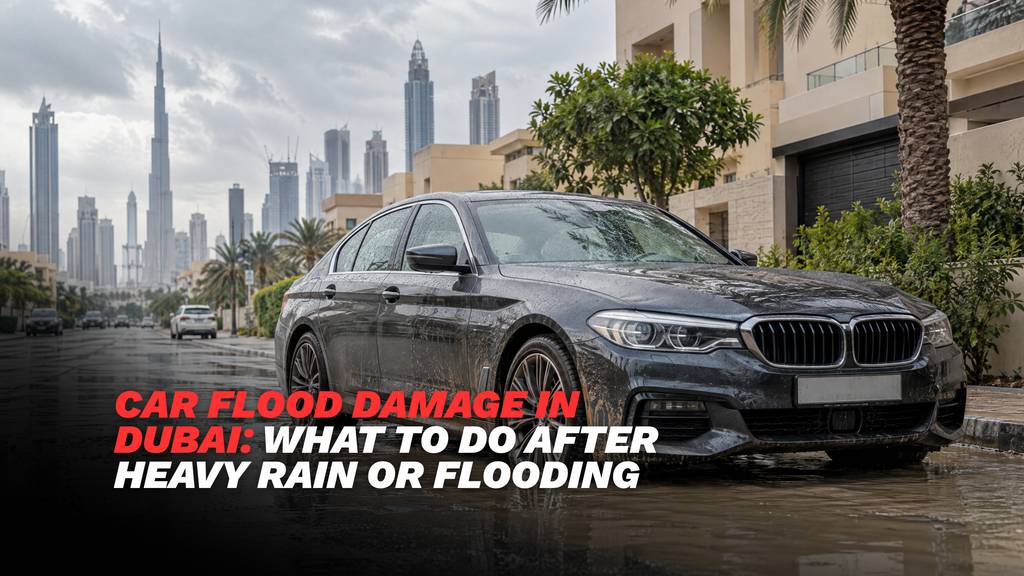
Worried about car flood damage in Dubai? Learn what to do after heavy rain, how to spot hidden problems and when to arrange a vehicle inspection.
Car flood damage in Dubai can happen when heavy rain leaves roads waterlogged and vehicles become stranded in flooded areas. Even after the water recedes, damage to an engine, electrical components or the interior may not be immediately obvious.
Dubai may not experience heavy rain frequently, but when it does, road conditions can change quickly. This guide explains how to stay safe, what to do if your vehicle is caught in floodwater, which warning signs to watch for afterwards and when to arrange an inspection.
First, prioritise your safety
Your safety comes before the vehicle. Do not enter flooded roads or attempt to retrieve a car from moving water.
- If water is rising or entering the vehicle, leave it only when you can do so safely and move to higher ground.
- Do not walk through moving floodwater; hidden drains, debris and strong currents can make it dangerous.
- If you are trapped or in immediate danger in the UAE, call police emergency services on 999. Follow instructions from emergency responders.
If conditions make it unsafe to exit, contact emergency services, share your location and follow their advice.
Why floodwater is dangerous for cars
Even relatively shallow floodwater can affect vehicle control. Deeper or moving water may cause a vehicle to float or be swept away. The road surface, water depth and current are often impossible to judge from the driver’s seat.
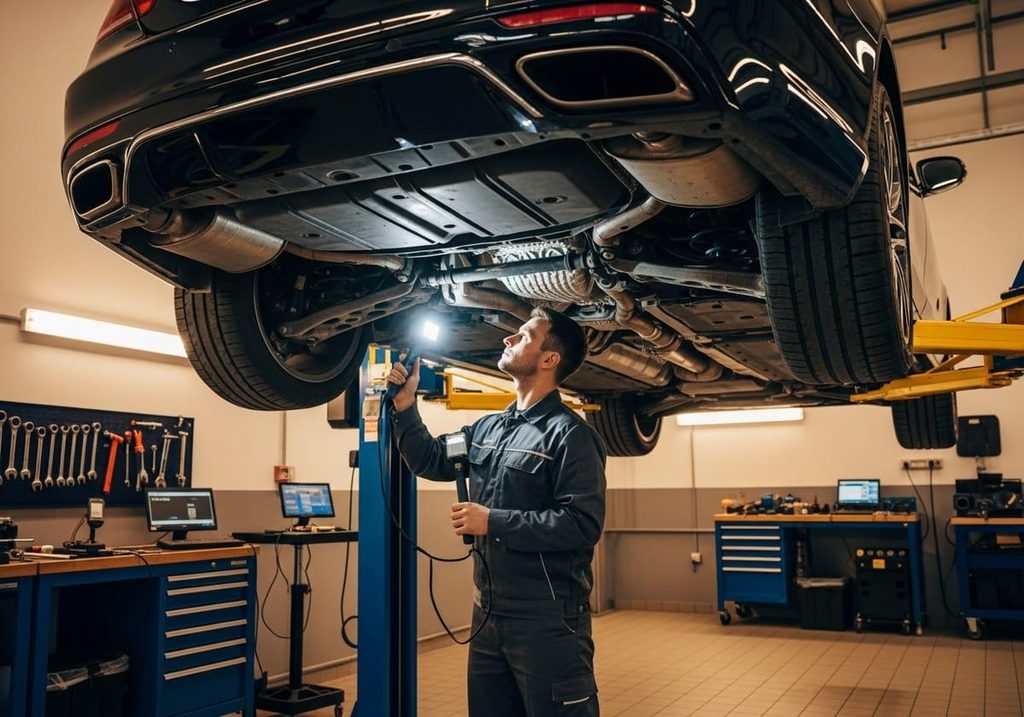
Floodwater can also reach the air intake, contaminate lubricants, affect brakes and enter electrical connectors or the cabin. The extent of damage depends on the vehicle, water depth, exposure time and whether the engine was running.
What to do if you see a flooded road ahead
- Slow down smoothly and allow extra stopping distance on wet roads.
- Do not drive into standing or moving floodwater. Turn around or use an alternative route when safe.
- Do not assume a route is safe because another vehicle crossed it; vehicle height and intake position differ.
- Use appropriate headlights for visibility and follow road closures and official advisories.
- Avoid sudden braking or steering inputs on slippery roads.
What to do if your car is already in floodwater
- Prioritise occupants’ safety and assess whether you can move to a safe location without entering dangerous water.
- If the engine stalls in water, do not restart it.
- If the vehicle is stationary and it is safe to do so, switch off the engine and ignition.
- If water is entering or rising around the vehicle, seek safe evacuation; call 999 if you are trapped or at risk.
- Once everyone is safe, arrange professional recovery rather than attempting to drive the vehicle away.
If a vehicle is significantly submerged, do not attempt to start it after the water recedes. Hybrid and electric vehicles may have damaged high-voltage components. Do not touch exposed cables, batteries or other electrical equipment; allow trained personnel to assess and recover the vehicle.
Why you should never restart an engine that stalled in water
If water enters the engine’s air intake and cylinders, attempting to crank or restart the engine can cause hydrolock. Unlike air, liquid water does not compress readily; internal engine components can bend or break when the engine attempts to turn.
An engine that stalls in floodwater should remain off until a qualified technician has inspected it. Restarting may turn a potentially repairable problem into much more extensive damage.
What to do after the water has receded
Car flood damage in Dubai is not always visible immediately. Corrosion, odours and electrical faults can develop after a vehicle appears dry. If the car was submerged or water entered the cabin, arrange recovery and inspection rather than starting or driving it.
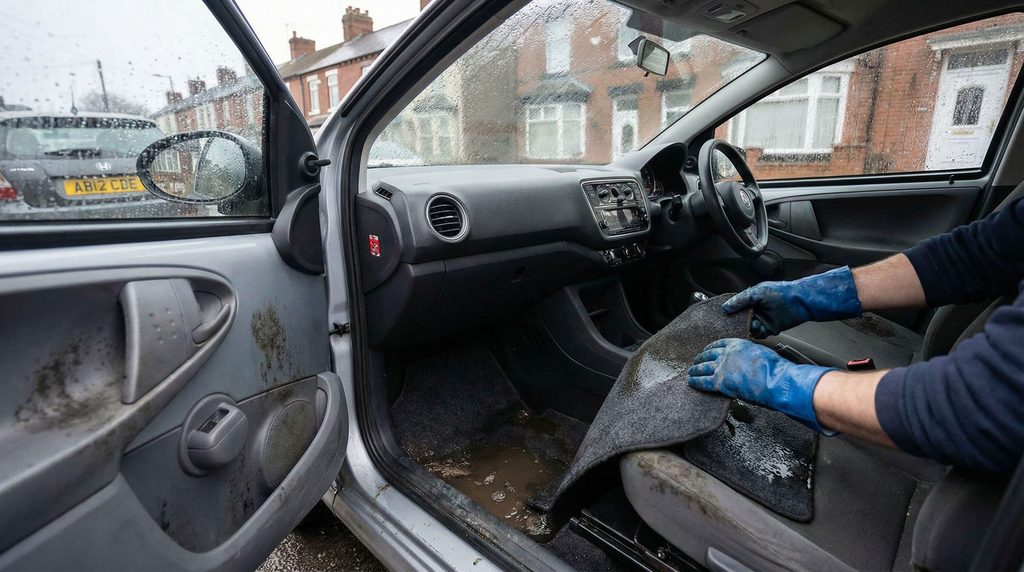
Checks you can make without operating the vehicle
- From a safe position, look for a visible waterline on the exterior, engine bay or interior.
- Look for damp carpets, wet seats, moisture in the boot or an unusual musty smell.
- Photograph visible water damage and note how high the water reached.
- Look for obvious damage from debris or potholes, without crawling beneath the vehicle.
- Tell the workshop whether the engine was running or stalled and whether water entered the cabin.
Do not switch on the ignition or test windows, lights and other electrical systems if the vehicle was submerged or electrical components may be wet. Leave those checks to a technician. If an engine-oil check suggests milky or foamy oil, report it to the workshop and do not start the engine.
Common problems after flooding
Engine and intake
Water may enter the intake or cylinders and may contaminate engine oil.
Electrical systems
Moisture in connectors, modules and wiring can lead to warning lights, intermittent faults or corrosion.
Brakes
Water and debris can affect braking performance; components may require cleaning or inspection.
Transmission and other fluids
Depending on water exposure and vehicle design, gearbox or differential fluids may become contaminated.
Air conditioning and interior
Wet carpets, insulation or HVAC components may cause persistent odours and mould growth.
Underbody and suspension
Debris, standing water and hidden road damage may affect components and contribute to corrosion.
How a workshop assesses suspected flood damage
A professional inspection is based on the water level, symptoms and type of vehicle. It may involve checking the air intake, fluid condition, brakes, electrical connectors, diagnostic fault codes, interior moisture and underbody components. A technician may recommend further checks before deciding whether the vehicle can safely be started or driven.
For related guidance, see QuickPro’s article on regular car servicing: https://qpauto.ae/what-happens-if-you-skip-regular-car-servicing/
Don’t forget your insurance
- Take photos or videos of the car and surrounding conditions only when it is safe.
- Contact your insurer and ask whether flood or water damage is covered by your specific policy.
- Check whether the insurer requires approval before recovery, inspection or repair.
- Keep records of recovery, inspection and repair expenses.
Insurance cover and claim requirements vary by policy and circumstances. Do not assume all flood damage is automatically covered.
How QuickPro Auto Services can help
If your vehicle has been exposed to heavy rain or flooding, QuickPro Auto Services in Al Quoz 3 can assess suspected water damage and explain the recommended next steps. Depending on the vehicle’s condition, an inspection may include engine and mechanical checks, electrical diagnostics, brake checks, AC assessment and fluid inspection.
Ask the team about the available inspection report format, current inspection charges and whether any inspection-fee waiver applies before booking.
QuickPro Auto Services | Al Quoz 3, Dubai | Website: qpauto.ae/ | Contact: +971 568056000
Frequently asked questions
Can I drive through shallow floodwater in Dubai?
Avoid driving through floodwater. You cannot reliably judge the depth, current or condition of the road beneath it, even when it looks shallow.
Is it safe to start a car after it has been submerged?
Do not attempt to start a submerged vehicle before professional assessment. Water may have reached the engine or electrical systems even if the car looks dry.
How soon should I have a flood-affected car inspected?
As soon as it is safe and practical. Prompt assessment may help identify contamination, trapped moisture and emerging electrical problems.
Will my car insurance cover flood damage?
It depends on your policy and the circumstances. Contact your insurer and follow its claims process.
Why does my car smell damp after heavy rain?
Moisture trapped in carpets, insulation or the ventilation system can cause musty odours. Have the source of water entry and the affected areas checked.
Can a car seem fine after flooding but develop problems later?
Yes. Corrosion, electrical faults and interior moisture problems may become apparent later. A vehicle that was submerged should be assessed even if no warning light is visible