
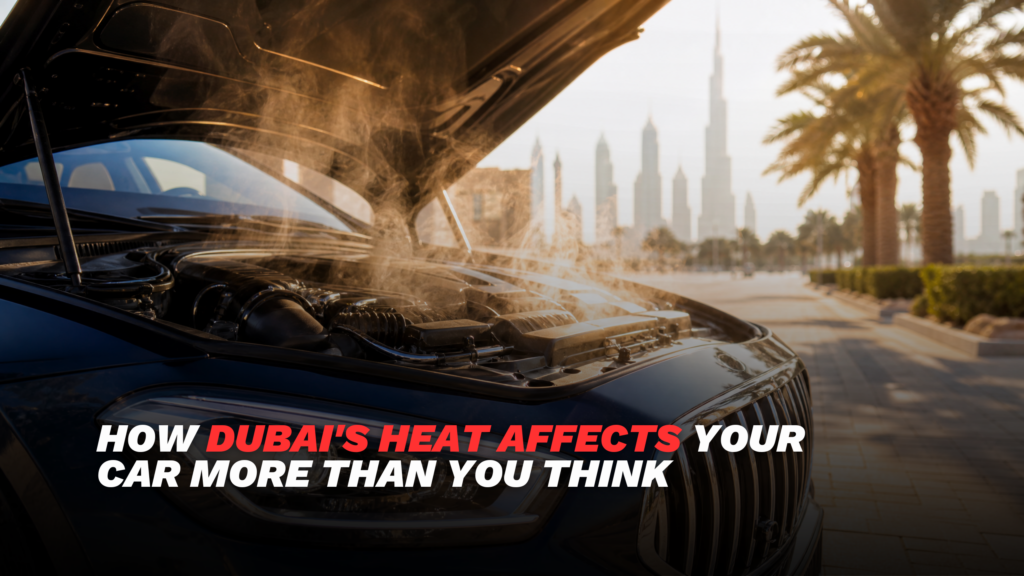
Learn how Dubai heat affects your car, from battery failure and tyre wear to AC and cooling system problems. Protect your vehicle from costly repairs.
Dubai’s climate is one of the toughest environments for vehicles. While most drivers are aware that summer temperatures can be uncomfortable, many underestimate the impact extreme heat can have on their cars.
With temperatures regularly exceeding 40°C during summer months, critical vehicle systems are placed under constant stress. From batteries and cooling systems to tyres and air conditioning, prolonged exposure to heat can accelerate wear and increase the risk of unexpected breakdowns.
Understanding how Dubai’s heat affects your car can help you prevent costly repairs and keep your vehicle performing reliably throughout the year.
How Dubai Heat Affects Your Car in Extreme Temperatures
Unlike cooler regions, vehicles in Dubai must operate under extreme temperatures for extended periods.
Common factors include:
- High ambient temperatures
- Intense UV exposure
- Long periods of idling in traffic
- Hot road surfaces
- Dust and sand accumulation
These conditions can affect both mechanical and electrical systems, particularly in luxury and high-performance vehicles.
1. Battery Failure Happens Faster in Dubai
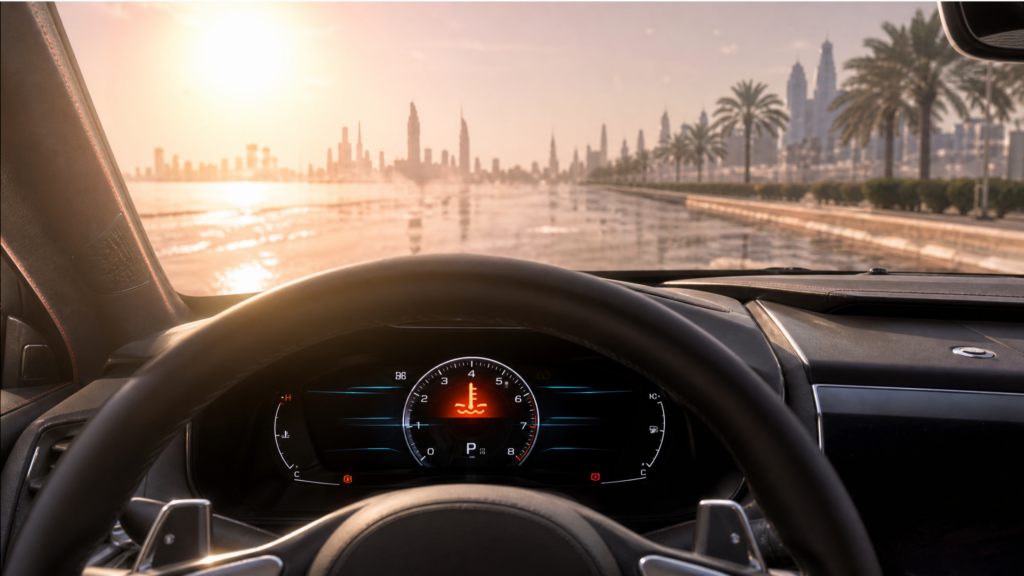
Car batteries are one of the most commonly affected components in hot climates.
Excessive heat accelerates the chemical reactions inside the battery, causing internal components to deteriorate faster.
Warning Signs:
- Slow engine cranking
- Battery warning light
- Difficulty starting the vehicle
- Electrical issues
Many batteries that typically last 4–5 years in moderate climates may only last 2–3 years in Dubai. If you notice slow starting or electrical issues, professional battery replacement in Dubai can help prevent unexpected breakdowns during the summer months.
2. Cooling Systems Work Harder Than Ever
Your vehicle’s cooling system is designed to regulate engine temperature. In extreme heat, the radiator, coolant, water pump, and hoses are constantly working to prevent overheating.
Even small cooling system issues can quickly become serious during summer.
Common Problems:
- Coolant leaks
- Radiator blockages
- Damaged hoses
- Faulty thermostat
Ignoring cooling system maintenance can lead to engine overheating and expensive repairs. In many cases, hidden cooling system pressure leaks can gradually reduce coolant efficiency and increase the risk of overheating during Dubai’s extreme summer temperatures.
3. Air Conditioning Systems Face Constant Stress
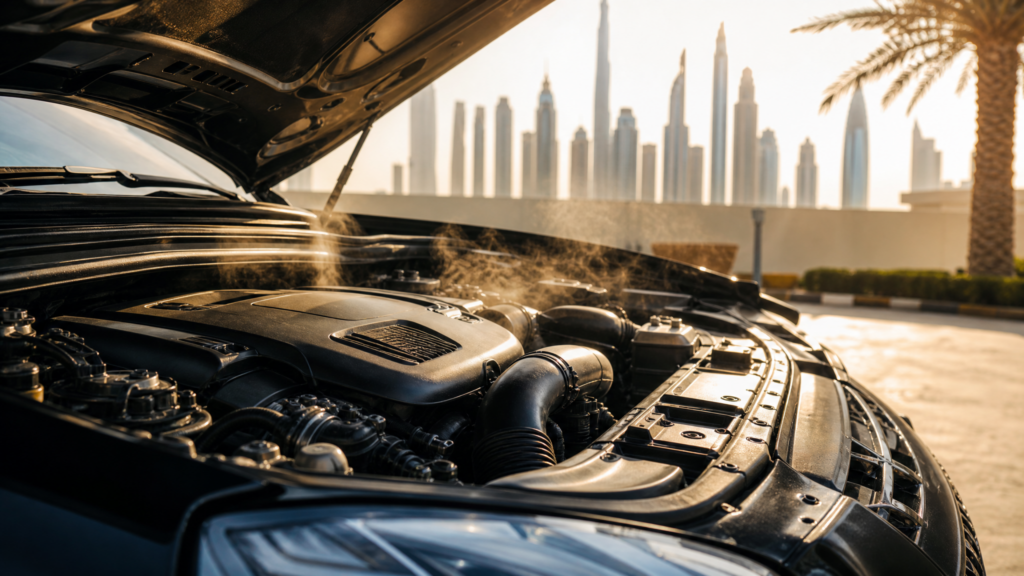
In Dubai, air conditioning is not a luxury—it is a necessity.
Most drivers use their AC almost every day, placing continuous demand on compressors, refrigerant systems, and cabin filters.
Common Signs of AC Problems:
- Weak airflow
- Warm air from vents
- Unusual AC noises
- Longer cooling times
Regular AC inspections help maintain comfort and prevent compressor damage.
4. Tyres Wear Out Faster in Extreme Temperatures
Tyres are in direct contact with hot road surfaces, which can become significantly hotter than the surrounding air temperature.
Heat increases tyre pressure and accelerates rubber deterioration.
Potential Risks:
- Uneven tyre wear
- Reduced grip
- Increased braking distance
- Higher risk of tyre failure
Routine tyre inspections and pressure checks are essential for safe driving. High road temperatures can significantly accelerate tyre wear in Dubai, making regular inspections and wheel alignment checks essential for safety and tyre longevity.
5. Engine Oil Breaks Down More Quickly
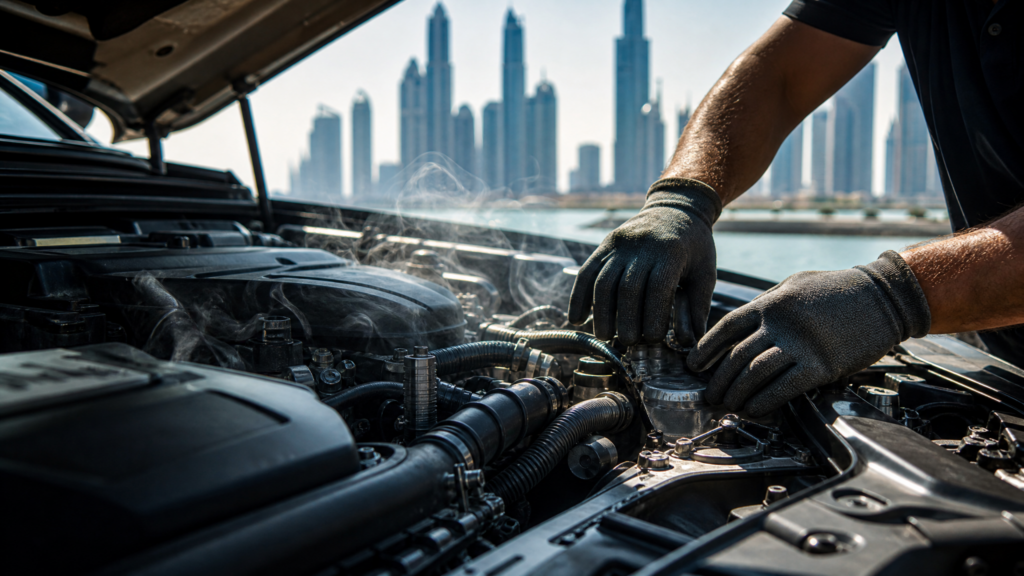
Engine oil lubricates and protects moving engine components.
Extreme temperatures can accelerate oil degradation, reducing its ability to protect the engine effectively.
Consequences of degraded oil include:
- Increased engine wear
- Reduced fuel efficiency
- Higher operating temperatures
- Reduced engine performance
Following recommended oil change intervals is particularly important in Dubai.
6. Exterior Paint and Trim Can Deteriorate
Constant UV exposure can affect your vehicle’s appearance over time.
Common issues include:
- Paint fading
- Clear coat deterioration
- Plastic trim discoloration
- Headlight oxidation
Protective solutions such as ceramic coating and Paint Protection Film (PPF) can help preserve your vehicle’s appearance.
7. Sensors and Electronics Are More Vulnerable
Modern luxury vehicles rely heavily on sensors and electronic systems.
Excessive heat can affect:
- Engine sensors
- Battery management systems
- Infotainment systems
- Electronic control modules
This is why advanced diagnostics are becoming increasingly important for modern vehicles.
How to Protect Your Car from Dubai’s Heat
Preventive maintenance is the most effective way to minimize heat-related problems.
Recommended practices include:
- Regular vehicle servicing
- Cooling system inspections
- Battery testing
- Tyre pressure checks
- Engine oil monitoring
- AC performance testing
- Periodic diagnostics
Identifying issues early can prevent breakdowns and significantly reduce repair costs. Understanding what happens if you skip regular car servicing can help vehicle owners avoid many of the heat-related issues that often lead to costly repairs and unexpected breakdowns.
For heat-related vehicle maintenance guidance.
For preventive maintenance recommendations.
Protect Your Vehicle with Professional Inspections
Dubai’s climate places unique demands on every vehicle, especially luxury and high-performance cars. What may seem like a minor issue today can quickly become a major repair if left unchecked.
At QuickPro Auto Services, we provide comprehensive inspections, diagnostics, and preventive maintenance services designed to help vehicles withstand Dubai’s extreme conditions and maintain peak performance year-round.
📍 Visit us in Al Quoz 3, Dubai
📞 Call us at 0568056000