
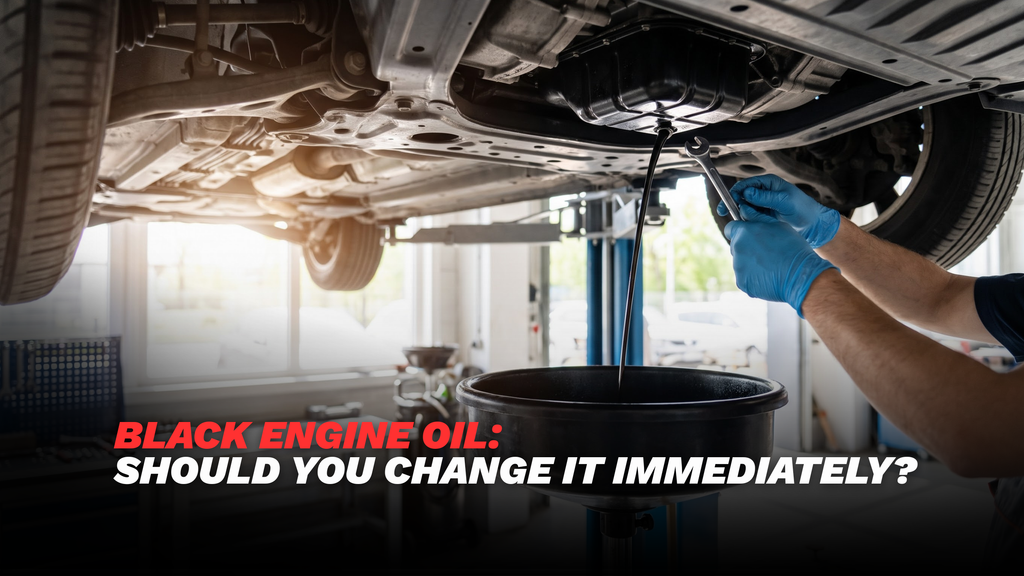
Black engine oil doesn’t always mean trouble. Discover why engine oil turns black, warning signs to watch for and when to change your car’s oil in Dubai.
A car recently came into our QuickPro Auto Services workshop in Dubai for a routine checkup.
During the inspection, our technicians noticed something that often worries car owners: the engine oil was very dark, almost black.
For many drivers, seeing black engine oil immediately raises questions.
Has the oil gone bad? Is the engine dirty? Has the car been driven too long without servicing? Does the oil need to be changed immediately?
The answer might surprise you.
Black engine oil does not always mean the oil is damaged or needs immediate replacement. In fact, engine oil naturally becomes darker as it circulates through the engine and collects certain contaminants.
However, there are situations where dark oil, especially when combined with other warning signs, can indicate a maintenance or mechanical problem.
So, how can you tell the difference?
Let’s understand why engine oil changes colour, what it means for your car, and when you should visit a workshop.
1. Why Does Engine Oil Turn Black?
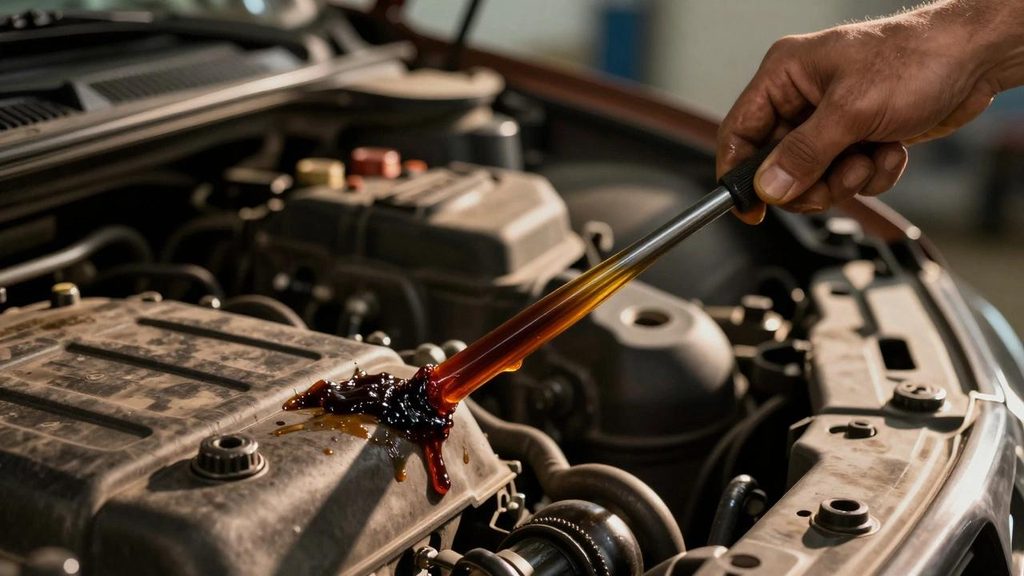
When you pour fresh engine oil into your car, it is usually amber or golden, although its original colour depends on the formulation.
After the engine starts operating, the oil begins circulating through different engine components.
Its job is not simply to lubricate moving parts. Engine oil also helps control friction, carry heat away from certain components, protect against corrosion, and keep contaminants suspended until the oil is replaced or filtered.
Over time, several factors can cause the oil to darken.
Heat and normal engine operation
Engine oil is exposed to high operating temperatures. Heat, oxidation and the normal ageing of the lubricant can gradually change its appearance and chemical properties.
Combustion byproducts
During engine operation, small amounts of combustion byproducts can enter the oil through normal blow-by. These contaminants may contribute to oil darkening.
Detergent and dispersant additives
Modern engine oils contain additives that help control deposits and keep small contaminants suspended. As the oil performs this cleaning function, its colour may become darker.
This is one reason dark engine oil is not automatically a sign of poor maintenance.
Soot accumulation
Diesel engines, in particular, can produce soot that enters the lubricant.
As a result, diesel engine oil may become black relatively quickly, even when the oil is still within its recommended service interval.
The important point: Engine oil colour alone cannot reliably tell you whether the oil is still suitable for use.
2. Is Black Engine Oil Always Bad?
No.
This is one of the most common misunderstandings about engine maintenance.
A car owner may check the dipstick, notice dark oil and immediately assume the engine needs an oil change.
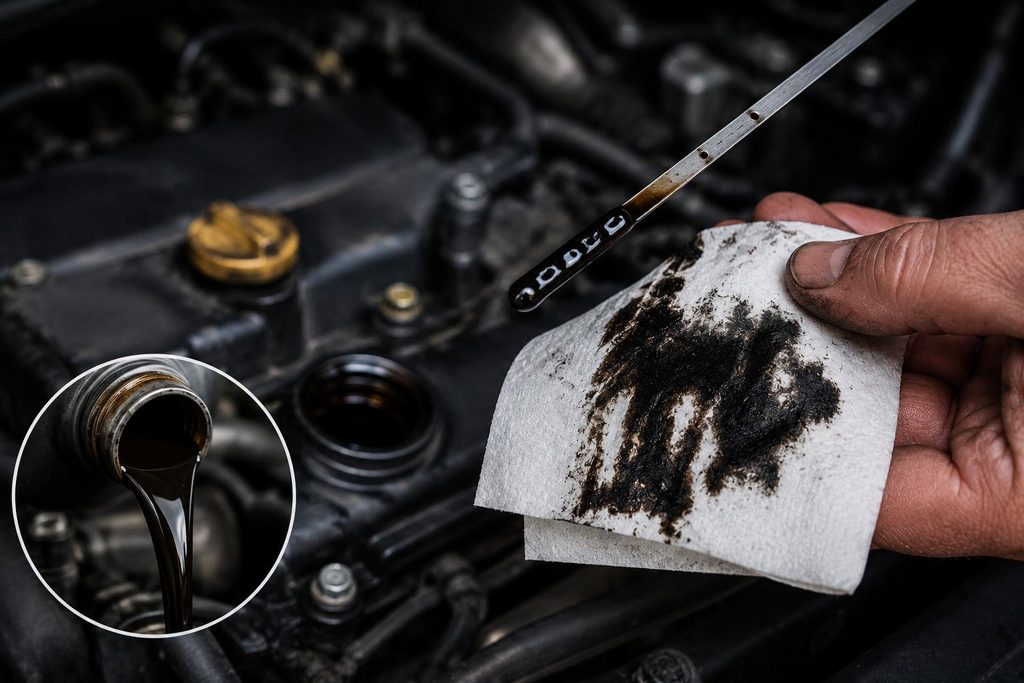
But the appearance of the oil is only one piece of information.
For example:
- An engine may have dark oil that is still within its recommended service interval.
- A diesel engine may darken fresh oil relatively quickly because of soot.
- Oil can appear relatively clean while its additives have deteriorated or it has exceeded its recommended service interval.
- Oil may become contaminated in ways that are not obvious from colour alone.
This means neither dark oil nor clean-looking oil should be used as the only basis for deciding when to change it.
The correct oil-change decision depends on the vehicle manufacturer’s recommendations, service history, operating conditions and any evidence of contamination or mechanical problems.
3. When Should You Worry About Black Engine Oil?
Although dark oil can be normal, certain accompanying symptoms deserve attention.
The oil is unusually thick or sludgy
If the oil has developed heavy sludge or abnormal deposits, it may indicate problems associated with contamination, oil degradation, unsuitable maintenance intervals or other operating conditions.
Sludge can interfere with lubrication and oil circulation.
However, sludge cannot be diagnosed simply because oil looks black on a dipstick.
The oil level keeps dropping
If your engine oil level repeatedly falls between services, the engine may be leaking or consuming oil.
Possible causes include external leaks, worn seals or internal engine conditions.
The cause needs to be investigated rather than assuming that black oil is responsible.
You notice a burning-oil smell
A burning smell may occur when leaking engine oil contacts hot components.
This is different from normal oil darkening and should be inspected.
The engine is making unusual noises
Knocking, ticking or other abnormal engine noises may indicate lubrication or mechanical problems.
These symptoms require attention, particularly if accompanied by an oil-pressure warning.
The oil-change interval has been exceeded
If the vehicle is overdue for an oil change, the oil may no longer provide the protection intended by the manufacturer.
Even if the oil looks normal, delaying scheduled maintenance can increase the risk of deposits, wear and other engine problems.
4. Black Engine Oil vs Engine Oil Sludge: What’s the Difference?
These two conditions are often confused.
Black engine oil refers to the colour of the lubricant. It may still flow normally and perform its intended functions.
Engine oil sludge refers to thickened deposits or accumulated material that can develop under certain conditions.
Sludge formation may be associated with factors such as:
- Extended oil-change intervals
- Oil oxidation and degradation
- Contamination
- Inappropriate lubricant selection
- Certain operating conditions
- Mechanical problems affecting the engine or oil
Sludge can restrict oil passages or interfere with lubrication in severe cases.
A technician may look for deposits in accessible areas, review the maintenance history and perform additional checks when necessary.
Black oil and sludge are not the same thing.
A vehicle should not be diagnosed with sludge simply because the oil appears dark.
5. Does Black Oil Mean Your Engine Is Dirty?
Not necessarily.
Engine oil contains detergent and dispersant additives designed to help manage deposits and contaminants.
Some darkening occurs because the oil is carrying combustion byproducts and other small particles.
However, oil colour cannot confirm that an engine is clean, dirty, healthy or damaged.
An engine’s internal condition is better assessed through its maintenance history, operating behaviour, relevant inspections and diagnostic testing.
If contamination or unusual deposits are suspected, further investigation may be needed.
6. Can Dubai’s Heat Affect Engine Oil?
Dubai’s climate places considerable demands on vehicles, particularly during the hotter months.
High ambient temperatures, prolonged AC usage, traffic congestion and extended driving periods can influence the conditions under which an engine operates.
However, modern engine oils are formulated to operate at temperatures substantially higher than the surrounding air.
The fact that Dubai is hot does not automatically mean your engine oil is failing.
What matters is using the correct oil specification and viscosity recommended by the vehicle manufacturer and following the appropriate maintenance schedule.
Certain driving patterns may also qualify as severe-service conditions under a manufacturer’s maintenance guidelines.
These can include frequent short journeys, extended idling, towing or other demanding operating conditions, depending on the vehicle.
Understanding how Dubai heat affects your car can also help drivers recognise why maintaining the cooling system, tyres, battery and engine fluids is particularly important during the hotter months.
Should you use thicker engine oil because Dubai is hot?
Not automatically.
Using thicker oil without checking the manufacturer’s specification can affect lubrication performance, especially in modern engines designed for particular oil grades.
Always follow the oil viscosity and performance specifications approved for your vehicle.
7. How Do Mechanics Check Whether Engine Oil Needs Changing?

When a vehicle arrives at QuickPro for inspection, oil condition should be considered alongside the vehicle’s service history and other relevant information.
A proper assessment may involve several checks.
Checking the oil level
The technician checks whether the oil level is within the manufacturer’s recommended range using the appropriate procedure for the vehicle.
Low oil levels can create lubrication risks, while overfilling can also cause problems.
Reviewing the service history
One of the most important questions is:
When was the engine oil last changed?
The vehicle’s mileage, service records and manufacturer’s recommended interval help determine whether maintenance is due.
Looking for signs of contamination
Unusual deposits, an abnormal appearance, fuel dilution or signs of coolant contamination may require further investigation.
Not every type of contamination can be identified reliably through visual inspection.
Checking for oil leaks
The technician may inspect accessible engine components for external oil leakage.
Investigating related symptoms
If the vehicle has unusual engine noises, warning lights, oil consumption or performance problems, additional diagnostic checks may be necessary.
Oil analysis when appropriate
For some vehicles or suspected problems, laboratory oil analysis can provide information about lubricant condition, contaminants and wear-related indicators.
Routine oil changes do not usually require laboratory analysis, but it can be useful in selected diagnostic situations.
The objective is to determine whether the oil requires replacement and whether there is an underlying problem that needs attention.
8. How Often Should You Change Engine Oil in Dubai?
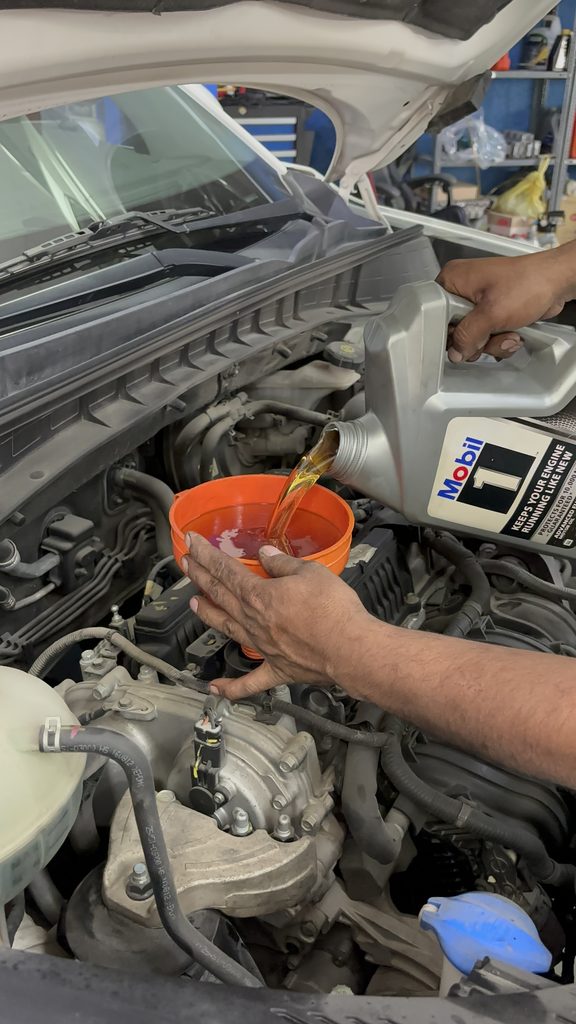
There is no single oil-change interval suitable for every car.
The correct interval depends on several factors, including:
- Vehicle manufacturer
- Engine type
- Oil specification
- Driving conditions
- Vehicle age and maintenance history
- Manufacturer-defined normal or severe-service schedules
Some vehicles require servicing based on distance travelled, while others also use time-based intervals or electronic oil-life monitoring systems.
Drivers should follow the manufacturer’s recommendations rather than relying on a universal mileage figure.
For example, a vehicle that spends considerable time idling may experience different operating conditions from one primarily driven on longer journeys.
If you’re unsure which interval applies to your vehicle, a workshop can help review the manufacturer’s maintenance guidance.
Knowing when to schedule an engine oil change in Dubai can help you follow the correct maintenance interval and avoid relying on oil colour alone to determine when servicing is required.
9. What Happens If You Delay an Engine Oil Change?
Engine oil does not remain in the same condition indefinitely.
Over time, its additives can become depleted, contaminants may accumulate, and the lubricant can undergo chemical and physical changes.
Understanding the long-term effects of skipping regular car servicing can help drivers recognise why timely oil changes, fluid checks and routine inspections are important for maintaining engine reliability.
Note : Choosing the correct oil involves more than viscosity, as recognised engine oil performance specifications help identify lubricants that meet particular engine protection and performance requirements.
If oil is used beyond its suitable service life, potential consequences include:
Increased engine wear
Inadequate lubrication can increase friction and wear between moving components.
Deposit formation
Degraded oil and accumulated contaminants may contribute to deposits and sludge.
Reduced lubrication performance
Oil that has deteriorated or become excessively contaminated may not perform as intended.
Potential engine damage
In severe cases, lubrication problems can contribute to expensive mechanical failures.
This is why following the correct oil-change schedule is more reliable than waiting until the oil turns black.
10. Can You Check Engine Oil at Home?
Yes. Many vehicles allow owners to check the oil level using a dipstick, while some modern cars use electronic oil-level monitoring.
Always follow the instructions in your owner’s manual.
For vehicles with a dipstick, the general process may involve:
- Parking on a level surface.
- Allowing the engine to reach the condition specified by the manufacturer for an accurate reading.
- Removing and cleaning the dipstick.
- Reinstalling it fully.
- Removing it again to check the oil level.
- Confirming that the level is within the recommended range.
Avoid touching hot engine components.
While checking, look for anything unusual, such as a very low oil level or obvious contamination.
However, remember that oil colour alone cannot determine whether the oil needs changing.
If you are unsure about the reading or notice repeated oil loss, arrange an inspection.
11. Should You Change Black Engine Oil Immediately?
Not necessarily.
If the oil is dark but the vehicle is operating normally, the oil level is correct and the car is still within its manufacturer-approved service interval, an immediate oil change may not be necessary solely because of the colour.
However, you should arrange an inspection if:
- The oil-change interval is overdue
- The oil level is unusually low
- The oil appears heavily contaminated
- Thick deposits or sludge are suspected
- The engine develops unusual noises
- Oil consumption has increased
- There are signs of oil leakage
- An oil-pressure warning appears
Important: If the red oil-pressure warning light illuminates while driving, stop as soon as it is safe, switch off the engine and seek professional assistance. Do not continue driving simply because the engine appears to run normally.
The Lesson From Our Workshop: Don’t Judge Engine Oil by Colour Alone
The recent vehicle inspection at QuickPro highlighted something worth sharing with every car owner.
When engine oil looks black, it’s natural to assume something is wrong.
But oil colour is only one clue.
What matters more is whether the oil is suitable for the engine, whether the vehicle has been maintained according to its recommended schedule, and whether there are signs of contamination, abnormal oil consumption or other mechanical problems.
The right approach is not to ignore dark oil or automatically replace it without understanding the vehicle’s condition.
It is to check the facts before making a maintenance decision.
Get Your Engine Oil Checked at QuickPro Auto Services
Not sure whether your engine oil needs changing?
At QuickPro Auto Services, our technicians can inspect your vehicle’s engine oil level, review its maintenance requirements and check for signs of oil leakage or related engine problems.
We provide routine vehicle servicing, engine oil changes and diagnostic inspections for everyday cars, SUVs, family vehicles and premium and performance vehicles.
QuickPro Auto Services
Al Quoz 3, Dubai
Call: 056 805 6000
Book an engine oil inspection or routine service and keep your vehicle maintained according to its requirements.