
Car temperature gauge fluctuating? Discover why it rises and falls, common cooling system problems, warning signs and when to get your car checked in Dubai.
You’re driving through Dubai when you notice something unusual on your dashboard. Your car’s temperature gauge starts rising higher than normal. A few minutes later, it drops back down. The car seems to be running fine, so you continue driving.
But then it happens again. Is your engine overheating? Is there something wrong with the cooling system? Or is it normal for the temperature gauge to move?
A fluctuating car temperature gauge can have several causes, ranging from low coolant levels and thermostat problems to cooling fan issues or faulty temperature sensors.
Some are relatively straightforward to repair. Others can lead to serious engine damage if ignored.
Understanding why your car’s temperature gauge is going up and down can help you recognise when something needs attention and when it’s time to visit a workshop.
What Does Your Car’s Temperature Gauge Actually Tell You?
The temperature gauge on your dashboard helps you monitor your engine’s operating temperature. In most modern vehicles with a conventional temperature gauge, it primarily reflects information from the engine coolant temperature sensor. As the engine warms up, the gauge usually rises from the cold position towards its normal operating range.
Once the engine reaches its intended operating temperature, the reading should generally remain relatively stable. However, not every vehicle displays temperature in the same way.
Some cars have a traditional needle gauge, others display digital readings, and some only provide a warning light. Many modern dashboard gauges are also designed to remain near the middle across a range of normal operating temperatures.
This means a noticeable or repeated change in the gauge reading deserves attention, particularly if it rises towards the hot or red zone.
Is It Normal for the Temperature Gauge to Move?
Some movement is normal, especially when you first start the engine.
For example:
- When the engine is cold, the gauge starts near the lower end.
- As the engine warms up, the gauge gradually rises.
- Once the engine reaches its normal operating temperature, the reading generally stabilises.
Small variations may occur depending on the vehicle’s design and operating conditions.
However, the following behaviour is worth investigating:
- The gauge repeatedly rises and falls during normal driving.
- The temperature climbs unusually high in traffic.
- The gauge drops suddenly after reaching normal temperature.
- The reading changes rapidly without an obvious reason.
- The gauge approaches the red zone.
- A temperature warning appears on the dashboard.
These symptoms do not all indicate the same problem.
The key is understanding when the temperature changes and what other symptoms appear alongside it.
1. Low Coolant Levels
One of the first things technicians may check when a car’s temperature gauge fluctuates is the coolant level. Coolant circulates through the engine and cooling system, helping transfer excess heat away from the engine.
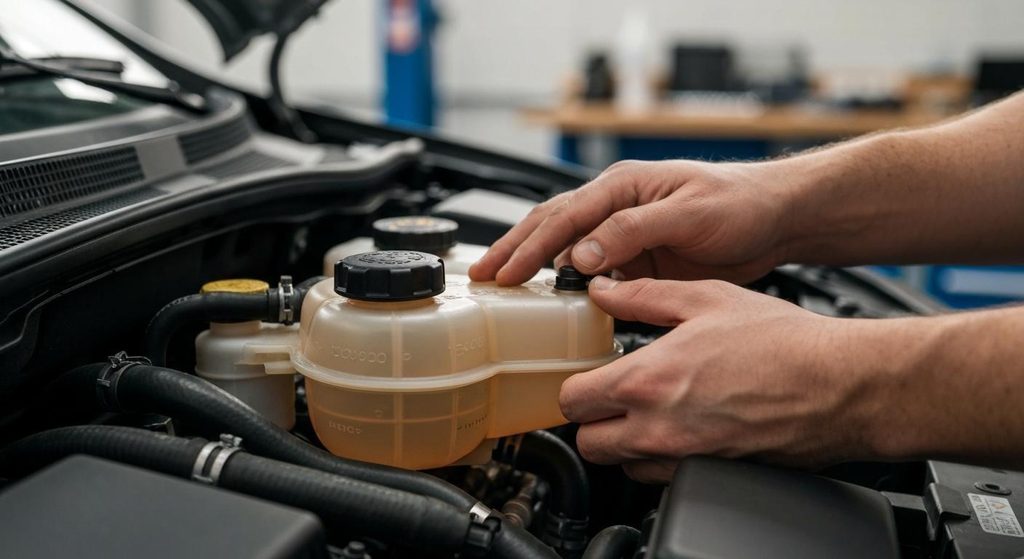
If the coolant level becomes too low, the cooling system may struggle to maintain a consistent operating temperature. In some cases, low coolant can also cause air to enter the system or interfere with accurate temperature readings.
What causes coolant levels to drop?
Possible causes include:
- Leaking radiator hoses
- Radiator leaks
- Water pump leaks
- Damaged coolant connections
- Expansion tank problems
- Internal coolant leaks
A small leak may not always leave an obvious puddle beneath the vehicle.
Sometimes coolant escapes only when the engine is hot and the cooling system is pressurised.
Some hidden cooling-system leaks may only become noticeable when the system reaches operating pressure, which is why technicians sometimes use pressure testing to locate leaks that are difficult to identify through visual inspection alone.
What should you do?
Check the coolant level only when the engine has cooled and according to the vehicle manufacturer’s instructions.
Never open a radiator cap or pressurised coolant reservoir while the engine is hot. Hot coolant and steam can cause serious burns.
If the coolant level keeps dropping, have the cooling system inspected rather than repeatedly topping it up without identifying the cause.
2. A Thermostat That Isn’t Working Properly
The thermostat is an important component of your vehicle’s cooling system.
It helps regulate coolant circulation between the engine and radiator as the engine warms up.
When operating correctly, it helps the engine reach and maintain its intended temperature.
However, a thermostat that becomes stuck or operates inconsistently can affect engine temperature.
What happens if the thermostat sticks closed?
If the thermostat fails to open properly, coolant flow to the radiator may be restricted.
This can cause engine temperature to rise excessively.
What happens if the thermostat sticks open?
If the thermostat remains open when it should be regulating flow, the engine may take longer to warm up or operate cooler than intended.
You might notice the temperature gauge staying unusually low or dropping during certain driving conditions.
Can a faulty thermostat cause the gauge to go up and down?
Yes.
A thermostat that opens inconsistently can contribute to abnormal temperature changes.
However, a fluctuating gauge alone does not confirm thermostat failure.
Technicians need to check the cooling system before deciding whether the thermostat requires replacement.
3. Cooling Fan Problems — Especially in Dubai Traffic
Have you noticed that your car’s temperature rises while waiting at a traffic signal but returns closer to normal once you start driving?
This is an important diagnostic clue. When your car is moving, air passes through the radiator and helps remove heat from the coolant. When the vehicle is stationary or moving slowly, the cooling system relies more heavily on its fan system to move air through the radiator.
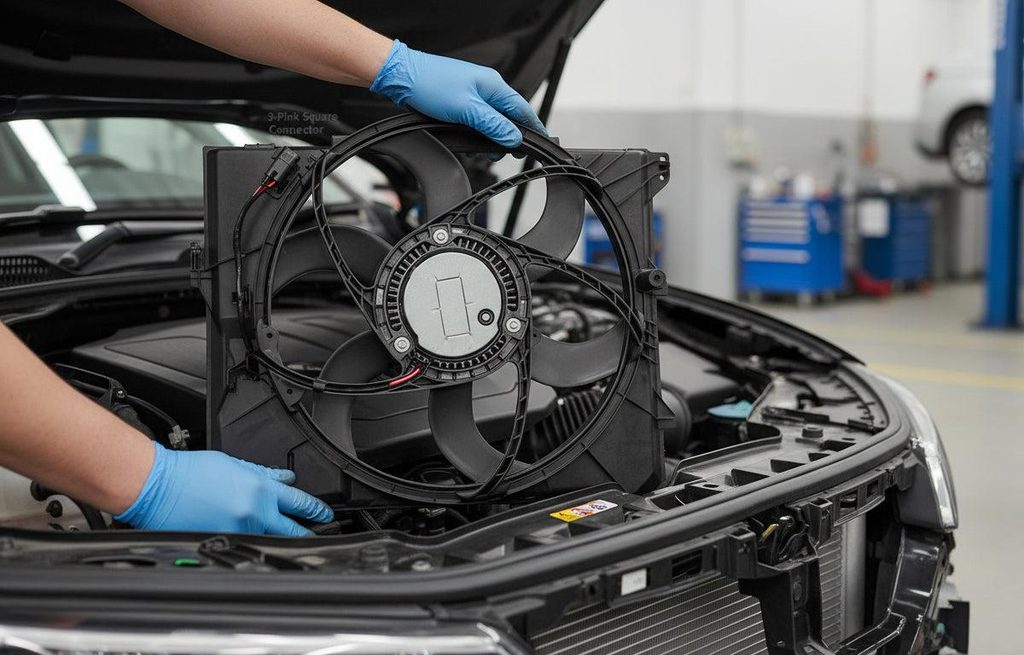
If the cooling fan is not operating correctly, the engine may become hotter during traffic or prolonged idling.
Possible cooling fan problems
These may include:
- A faulty fan motor
- Electrical or wiring problems
- A malfunctioning fan control system
- Faulty relays or related components, depending on vehicle design
- Cooling fan operation that is insufficient for the conditions
Why is this particularly noticeable in Dubai?
During Dubai’s hotter months, the cooling system has to manage engine heat while the surrounding air temperature is already high.
Heavy traffic and extended idling can make inadequate cooling fan performance more noticeable.
The air-conditioning system can also place additional demands on cooling components.
If your car temperature rises in traffic but drops when driving, the cooling fan and overall cooling system should be checked.
However, fan failure is not the only possible explanation. Restricted airflow, low coolant, radiator problems and other cooling-system faults may produce similar symptoms.
4. A Faulty Coolant Temperature Sensor
Sometimes the engine’s actual temperature is not changing as dramatically as the dashboard suggests.
The problem may involve the temperature sensor or the system displaying the reading.
Modern vehicles use coolant temperature information for engine management and, depending on the design, dashboard temperature displays and cooling fan control.
If the sensor provides inaccurate or inconsistent information, the dashboard may show unusual temperature changes.
Possible signs of a sensor-related problem
- The gauge changes suddenly or behaves erratically.
- The reading appears inconsistent with the vehicle’s operating conditions.
- The temperature warning appears unexpectedly.
- Cooling fan behaviour is unusual.
- Related diagnostic trouble codes are stored.
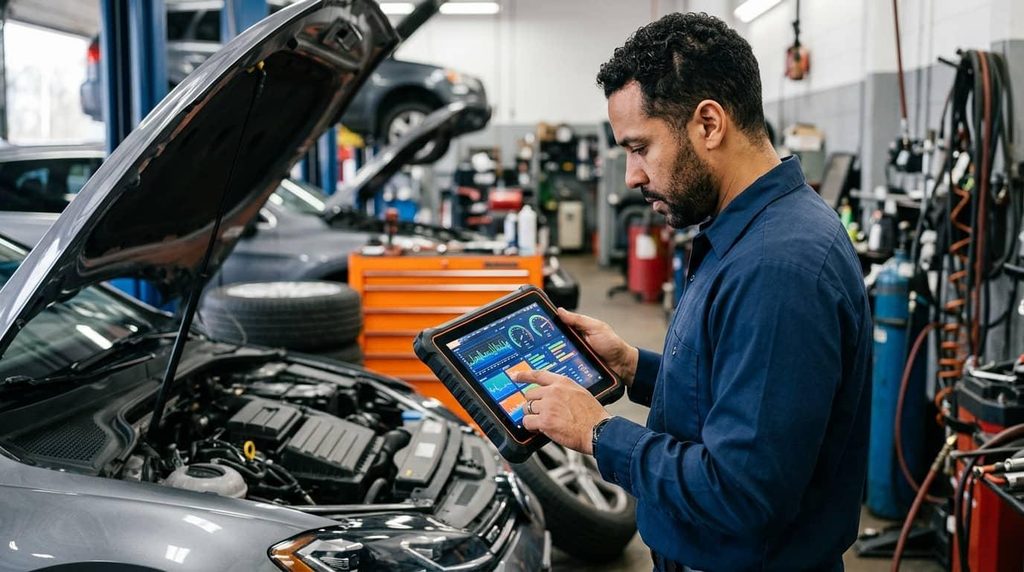
A technician can use diagnostic equipment to examine the temperature readings reported by the vehicle’s control systems.
This helps determine whether the gauge movement reflects a genuine cooling problem or an issue with the temperature measurement or display.
Do not assume the sensor is faulty simply because the temperature gauge fluctuates.
A genuine overheating problem must be ruled out first.
5. Air Trapped Inside the Cooling System
Air trapped in the cooling system can interfere with coolant circulation and temperature regulation.
This can sometimes happen after cooling-system repairs or coolant replacement if the system has not been filled and bled according to the manufacturer’s procedure.
Air may also enter the system when coolant levels become low due to a leak.
What symptoms might appear?
Depending on the vehicle, trapped air may contribute to:
- Unstable temperature readings
- Inconsistent cabin heating
- Overheating
- Unusual coolant circulation behaviour
- Coolant level changes
Some vehicles require specific bleeding procedures or vacuum-filling equipment to remove trapped air properly.
Simply adding coolant to the reservoir may not remove air from all parts of the system.
If the temperature fluctuations began after radiator, hose, thermostat or coolant-related work, inform the technician.
That information can help narrow down the possible cause.
6. Radiator or Coolant Circulation Problems
Your radiator plays a major role in removing heat from the coolant before it circulates back through the engine. If the radiator cannot release heat effectively, the engine temperature may rise under certain conditions.
Recognising the early signs your car radiator needs repair can help drivers identify developing cooling-system problems before they lead to more serious overheating issues.
Possible causes include:
- External blockage restricting airflow through the radiator
- Internal restrictions affecting coolant flow
- Coolant circulation problems
- Deteriorated radiator components
- Cooling-system leaks
The water pump also plays an important role by circulating coolant through the system.
If coolant circulation is inadequate, engine temperature can become unstable or rise excessively.
Can dust affect radiator performance in Dubai?
Dust and debris can accumulate around cooling components and restrict airflow when buildup becomes significant.
However, not every dusty radiator is blocked, and not every overheating problem is caused by dust.
A professional inspection helps determine whether cleaning, repair or replacement is actually necessary.
7. Why Does Your Car Temperature Rise in Traffic but Drop on the Highway?
This is one of the most useful patterns to describe to your mechanic.
Imagine this situation:
You’re driving on Sheikh Zayed Road, and your temperature gauge stays normal.
Later, you enter slow-moving traffic.
After several minutes, the gauge begins climbing.
Once traffic clears and the car starts moving again, the temperature drops.
What could be happening?
At higher road speeds, airflow through the radiator generally increases.
During idling and slow-moving traffic, the cooling fan becomes especially important.
If the fan is not working correctly, the difference in airflow may cause the temperature to rise when stationary.
However, other problems can also become noticeable under these conditions, including insufficient coolant, restricted heat transfer or cooling-system faults.
What should you tell the technician?
Explain whether the temperature rises:
- Only when the car is stationary
- During slow-moving traffic
- When the AC is running
- During highway driving
- Under heavy engine load
- After a particular amount of driving time
These details can help technicians identify which parts of the cooling system need closer inspection.
8. Why Does the Temperature Gauge Drop While Driving?
A temperature gauge that stays unusually low or drops below its normal operating position may indicate a different issue from overheating.
One possible cause is a thermostat that is stuck open.
This can allow the engine to operate cooler than intended under certain conditions.
Other possibilities include inaccurate temperature readings or sensor-related problems.
Some movement may also be normal depending on the vehicle’s gauge design.
Is an engine running too cool a problem?
An engine that consistently operates below its intended temperature may experience reduced efficiency or other operating issues.
The correct diagnosis depends on the actual coolant temperature, not simply the dashboard needle position.
A technician may compare live temperature data with the vehicle manufacturer’s expected operating range.
9. How Do Mechanics Diagnose a Fluctuating Temperature Gauge?
When a car arrives at QuickPro with unusual temperature gauge behaviour, the most useful approach is to investigate the cause rather than immediately replacing a suspected component.
Depending on the symptoms and vehicle, the diagnostic process may include the following checks.
Step 1: Understanding the symptoms
The technician asks when the temperature changes occur.
For example, does the gauge rise during traffic, while driving at highway speeds or when the AC is switched on?
Step 2: Checking coolant levels and visible leaks
The cooling system is inspected for low coolant, damaged hoses, leakage and other visible abnormalities.
Step 3: Checking cooling fan operation
Technicians may assess whether the cooling fans operate as required under the appropriate conditions.
Step 4: Reviewing diagnostic data
A diagnostic scanner can help examine coolant temperature readings and relevant fault codes.
Step 5: Checking thermostat and coolant circulation
Where appropriate, the technician may investigate whether coolant is circulating and being regulated correctly.
Step 6: Inspecting the radiator and related components
Radiator condition, airflow and other cooling-system components may be checked.
Step 7: Performing further tests if necessary
Depending on the findings, additional tests such as a cooling-system pressure test may help identify leaks.
The exact diagnostic process depends on the vehicle and the symptoms reported.
A fluctuating temperature gauge is a symptom, not a diagnosis.
Identifying the actual cause helps avoid unnecessary replacement of parts.
10. Can You Continue Driving If the Temperature Gauge Keeps Moving?
That depends on how the gauge is behaving.
A small movement within the vehicle’s normal operating range may not indicate an immediate problem.
However, repeated unusual fluctuations should be investigated.
Stop driving if you notice:
- The temperature gauge entering the red or hot zone
- An engine overheating warning
- Steam coming from the engine compartment
- A sudden loss of coolant
- Severe engine performance problems alongside overheating
If the engine is overheating, pull over safely, switch off the engine and arrange professional assistance.
Do not continue driving in the hope that the temperature will eventually return to normal.
Also, do not open the cooling system while it is hot.
Driving an overheating engine can cause serious damage, including cylinder-head distortion, head-gasket failure and other costly mechanical problems.
If the temperature gauge behaves erratically without overheating warnings, arrange an inspection promptly rather than ignoring the issue.
11. How Can You Reduce the Risk of Cooling-System Problems?
While not every cooling-system problem can be prevented, regular maintenance can help identify developing issues.
Following the manufacturer’s maintenance recommendations is essential for preventing cooling-system problems. Understanding the basics of maintaining your car’s cooling system can also help drivers recognise the importance of coolant checks, radiator care and timely inspections.
Some practical steps include:
- Follow your vehicle manufacturer’s maintenance schedule.
- Use coolant that meets the manufacturer’s required specification.
- Check coolant levels according to the owner’s manual.
- Investigate repeated coolant loss.
- Have damaged hoses or visible leaks inspected.
- Pay attention to unusual temperature gauge behaviour.
- Avoid ignoring overheating warnings.
- Arrange cooling-system inspections when symptoms develop.
Remember that coolant is not simply coloured water.
Different vehicles require particular coolant formulations, and mixing incompatible products may cause problems.
Always use the coolant specification recommended for your vehicle.
Don’t Ignore a Temperature Gauge That Keeps Changing
Your car’s temperature gauge provides useful information about how the engine is operating.
If the reading repeatedly rises and falls, the cause could involve low coolant, a faulty thermostat, cooling fan problems, trapped air, a temperature sensor or restricted coolant circulation.
Some issues are relatively straightforward to identify.
Others may require more detailed inspection.
The important thing is not to assume that every temperature fluctuation means the same problem.
Understanding when the temperature changes is often the first step towards identifying why it happens.
Get Your Car’s Cooling System Checked at QuickPro Auto Services
Is your car temperature gauge going up and down?
Does your engine temperature rise during Dubai traffic but return to normal when you start driving?
At QuickPro Auto Services, our technicians can inspect your vehicle’s cooling system, investigate coolant leaks, check cooling fan operation and diagnose temperature-related problems.
Whether you drive an everyday car, family SUV, luxury vehicle or performance car, identifying cooling-system problems early can help prevent unexpected breakdowns and costly repairs.
QuickPro Auto Services
Al Quoz 3, Dubai
Call: 056 805 6000
Book a cooling-system inspection and find out what’s causing your car’s temperature to fluctuate.