

Engine shaking when idle or stopped at a traffic light? Discover 7 common causes, including engine mounts, misfires, vacuum leaks, injectors and sensor problems.
Your car feels smooth while driving, but as soon as you stop at a traffic light, you notice a vibration through the steering wheel, seat, or dashboard. Sometimes the shaking becomes more noticeable when the AC is running, and then seems to disappear once you start moving again.
So, is this normal?
A very slight engine vibration at idle can be normal. But if your engine shakes when idle noticeably, especially if the vibration is new or becoming stronger, it may indicate an issue that needs attention.
From worn engine mounts and ignition problems to vacuum leaks and dirty throttle bodies, several components can cause a car to shake while stationary.
Here’s what drivers should know.
Why Does an Engine Vibrate More When the Car Is Stopped?
When your car is moving, changes in engine speed, road movement, and other vehicle vibrations can make small engine irregularities less noticeable.
At a traffic light, however, the engine is operating at idle while the vehicle remains stationary. If something is preventing the engine from running smoothly, you may feel the vibration more clearly through the cabin.
You might notice:
- Steering wheel vibration
- Shaking through the driver’s seat
- Dashboard vibration
- Rough or uneven engine sound
- RPM fluctuating slightly
- Vibration becoming stronger when the AC is switched on
The exact behaviour can provide useful clues about what is causing the problem.
1. Worn or Damaged Engine Mounts
One of the first components to consider when an engine is running normally but excessive vibration is entering the cabin is the engine mount.
Engine mounts secure the engine to the vehicle while helping absorb the vibration produced during normal engine operation.
As mounts wear, crack, or deteriorate, they may become less effective at isolating that vibration.
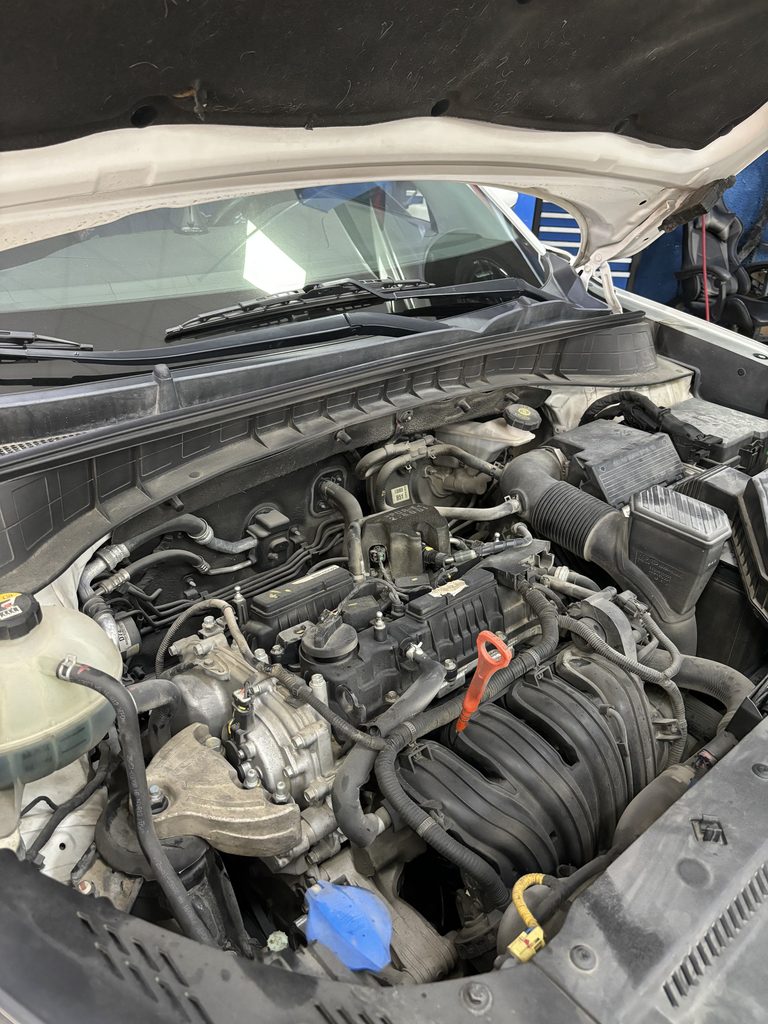
Signs of worn engine mounts can include:
- Excessive vibration while idling
- Vibration through the steering wheel or seats
- A noticeable movement when shifting between Drive and Reverse
- Clunking or movement when accelerating
- Vibration becoming more noticeable with the AC running
If the engine itself appears to run smoothly but the entire cabin feels unusually shaky, the mounts should be inspected.
2. Spark Plug or Ignition Coil Problems
Your engine depends on each cylinder firing correctly.
Spark plugs ignite the air-fuel mixture inside the cylinders, while ignition coils provide the electrical energy required to create that spark.
If a spark plug or ignition coil isn’t working correctly, one or more cylinders may not fire consistently. This is known as an engine misfire.
Understanding the common causes of car engine misfiring can help explain why ignition, fuel, or airflow problems may cause rough idling, vibration, hesitation, and reduced engine performance.
At idle, a misfire can be particularly noticeable because the engine is operating at relatively low RPM.
Possible symptoms include:
- Rough idle
- Engine shaking
- Hesitation during acceleration
- Loss of power
- Increased fuel consumption
- Check Engine Light
Some vehicles may feel relatively normal while cruising but become noticeably rough when stopped. Regularly maintaining spark plugs for optimal engine performance is important because worn or faulty plugs can contribute to misfires and other engine-performance problems.
3. A Vacuum or Intake-System Leak
This is another common reason an engine may idle roughly.
Modern engines carefully control the amount of air entering the engine. If additional, unmeasured air enters through a cracked hose, damaged seal, intake gasket, or another leak, the engine-management system may struggle to maintain the correct air-fuel mixture.
The result can be an unstable or rough idle.
Other signs of a vacuum leak may include:
- Engine RPM fluctuating
- Hissing sound from the engine area
- Check Engine Light
- Hesitation
- Reduced engine performance
- Increased fuel consumption
Some vacuum leaks are extremely small and difficult to locate visually. When a leak is hidden inside the intake or vacuum system, technicians may use smoke testing to detect a vacuum leak and pinpoint exactly where unwanted air is entering the system.
In these situations, diagnostic methods such as a smoke test can help locate hidden leaks by introducing controlled smoke into the system and identifying where it escapes.
4. Dirty Throttle Body
The throttle body helps control the amount of air entering the engine.
Over time, deposits can accumulate around the throttle plate and surrounding passages. If airflow becomes restricted or inconsistent, maintaining a stable idle may become more difficult.
You may notice:
- Rough idle
- RPM fluctuations
- Engine hesitation
- Stalling in some cases
- Poor throttle response
However, a rough idle should not automatically lead to throttle-body cleaning. Proper diagnosis is important because ignition faults, vacuum leaks, fuel problems, and sensor issues can produce similar symptoms.
5. Dirty or Faulty Fuel Injectors
Fuel injectors are responsible for delivering a controlled amount of fuel to each cylinder.
If an injector becomes partially blocked or develops a fault, fuel delivery may become uneven.
At higher engine speeds, the symptoms may sometimes be less obvious. When the engine is idling at a traffic light, however, uneven combustion can become much easier to feel.
Possible symptoms include:
- Engine vibration
- Rough idle
- Hesitation
- Poor acceleration
- Increased fuel consumption
- Engine misfire
- Check Engine Light
Diagnostics can help determine whether the issue actually involves an injector rather than replacing fuel-system components unnecessarily.
6. The Vibration Gets Worse When the AC Is On
This is particularly relevant for drivers in Dubai, where the air conditioning system operates for much of the year.
When the AC compressor engages, it places an additional load on the engine.
A properly functioning engine-management system compensates for this additional load, so a small change in engine sound or vibration can be normal.
However, if the car begins shaking noticeably when the AC is switched on, it may expose an existing problem such as:
- Weak or damaged engine mounts
- Unstable engine idle
- Ignition problems
- Dirty throttle body
- Airflow problems
- AC compressor-related issues
In other words, the AC may not necessarily be the original cause. The additional load may simply make an existing problem easier to notice.
7. Engine Sensor Problems
Modern engines use multiple sensors to continuously adjust ignition timing, fuel delivery, and airflow.
Depending on the vehicle, problems involving sensors such as the Mass Air Flow (MAF) sensor, Manifold Absolute Pressure (MAP) sensor, oxygen sensors, or other engine-management components can contribute to poor idle quality.
Possible symptoms may include:
- Rough idle
- Engine hesitation
- Reduced performance
- Higher fuel consumption
- Check Engine Light
Because modern vehicles store diagnostic information in their electronic control systems, scanning the vehicle for fault codes and reviewing live engine data can be an important part of diagnosis.
A fault code, however, does not always mean the component named in the code automatically needs replacing. Further testing may still be necessary.
What If the Car Shakes Only in Drive but Not in Park?
This is an important clue.
When an automatic vehicle is placed in Drive while you hold the brake at a traffic light, additional load is placed on the engine compared with Park or Neutral.
If vibration becomes considerably stronger in Drive, technicians may investigate areas such as:
- Engine and transmission mounts
- Engine idle quality
- Ignition performance
- Fuel delivery
- Air intake system
- AC compressor load
The difference between Park, Neutral, Drive, and Reverse can sometimes help narrow down the cause.
What If the RPM Goes Up and Down While Idling?
A stable engine should generally maintain a relatively consistent idle speed once it has warmed up.
If the RPM repeatedly rises and falls while you’re stopped, sometimes described as a “hunting” idle, possible causes can include:
- Vacuum or intake leaks
- Throttle-body problems
- Airflow sensor faults
- Fuel-delivery problems
- Engine-management issues
This is different from an engine that maintains steady RPM but transmits excessive vibration into the cabin.
That distinction can be useful during diagnosis.
What If the Engine Shakes and the Check Engine Light Is On?
A Check Engine Light together with rough idle or shaking deserves attention.
The vehicle’s computer may have detected an abnormal condition involving combustion, airflow, fuel delivery, emissions, or another engine-management system.
If the Check Engine Light is flashing rather than continuously illuminated, the situation can be more urgent because a severe misfire may be occurring.
Continuing to drive with a significant misfire can potentially cause additional problems, including damage to the catalytic converter.
The vehicle should be diagnosed promptly.
Why Is This Problem Commonly Noticed in Dubai Traffic?
Dubai’s roads themselves may be excellent, but everyday driving can still place significant demands on a vehicle.
Drivers frequently experience:
- Long periods of stop-start traffic
- Extended engine idling
- Heavy AC usage
- High ambient temperatures
- Dust and airborne contaminants
- Long highway journeys
Sitting stationary with the engine idling and AC operating can make existing vibration or idle problems particularly noticeable.
Dubai’s climate does not necessarily cause every rough-idle problem, but heat, AC demand, and operating conditions can expose weaknesses in components that are already deteriorating.
Can Low Engine Oil Cause the Car to Shake at Idle?
Low engine oil should always be addressed, but it is not one of the first explanations for a typical rough idle.
Engine oil lubricates and protects moving components inside the engine. If the oil level becomes dangerously low, serious engine damage can occur.
However, if your car is shaking while stationary, technicians would generally need to investigate the entire symptom rather than simply assuming an oil change will solve it.
Always check the oil level according to the manufacturer’s instructions and never ignore an oil-pressure warning.
Is It Safe to Keep Driving If the Engine Shakes at Idle?
It depends on the cause and severity.
A mild vibration caused by a deteriorating engine mount is different from severe shaking caused by an active engine misfire.
Arrange an inspection if:
- The vibration has recently appeared
- The shaking is becoming progressively worse
- The Check Engine Light is illuminated
- RPM is fluctuating
- The engine is losing power
- The car hesitates while accelerating
- You hear unusual engine noises
- The vehicle is consuming noticeably more fuel
- The vibration is severe when selecting Drive or Reverse
If the Check Engine Light is flashing, the engine is shaking severely, or the vehicle has significantly lost power, avoid treating it as a minor vibration problem.
Why Proper Diagnosis Matters
One of the challenges with engine shaking when idle is that many different problems can create a similar sensation.
For example, replacing engine mounts will not solve an ignition misfire. Cleaning the throttle body won’t repair a vacuum leak. And replacing spark plugs won’t fix a damaged engine mount.
A proper diagnostic process may include:
- Visual engine inspection
- Computer diagnostic scan
- Checking fault codes and live data
- Ignition-system testing
- Inspecting engine and transmission mounts
- Checking intake and vacuum systems
- Smoke testing for hidden air leaks when appropriate
- Fuel-system testing where necessary
The objective should be to identify the actual cause of the vibration before replacing components.
Don’t Ignore a New Engine Vibration

If your car has always idled smoothly and suddenly starts shaking at traffic lights, something has changed.
It may be as straightforward as a worn engine mount, or the vibration could be caused by an ignition problem, vacuum leak, fuel-delivery issue, dirty throttle body, sensor fault, or another engine-related problem.
Paying attention to when the vibration happens — AC on or off, Drive or Park, cold or warm engine, steady or fluctuating RPM — can also provide useful information when you take the vehicle for inspection.
At QuickPro Auto Services, we diagnose engine vibration, rough idling, engine misfires, vacuum and intake leaks, ignition faults, and other engine-performance problems. Our technicians work on everyday cars, family vehicles, SUVs, commercial vehicles, and premium and performance vehicles.
QuickPro Auto Services – Al Quoz 3, Dubai
Call: 056 805 6000