
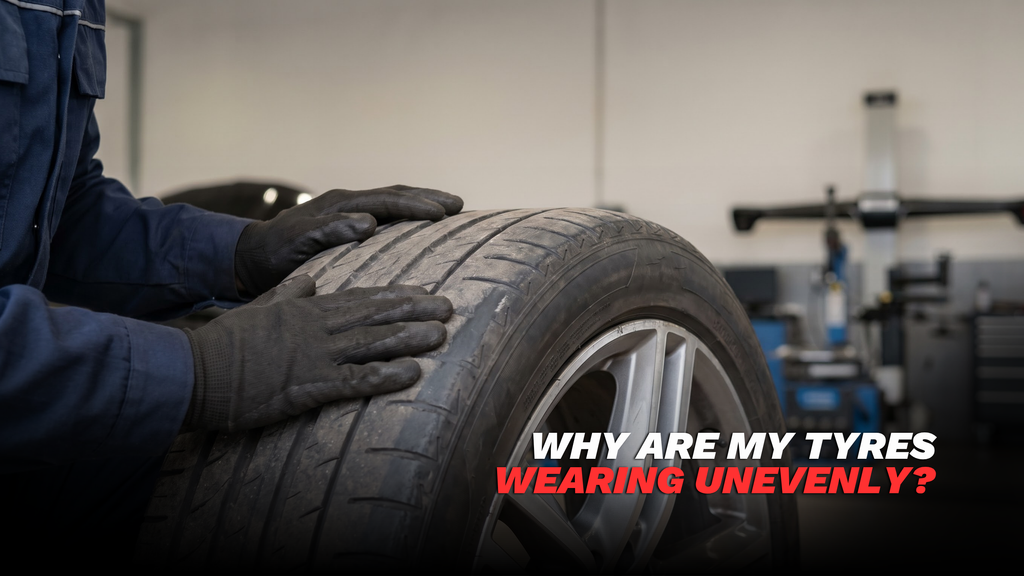
Uneven tyre wear can reveal problems with tyre pressure, wheel alignment, balancing or suspension. Learn what different tyre wear patterns mean and when to get your car checked.
Tyres rarely wear unevenly without a reason. If one side of a tyre is wearing faster than the other, the centre tread is disappearing first, or the surface has developed unusual patches, your tyres may be revealing a problem elsewhere in the vehicle.
Uneven tyre wear can be caused by something as simple as incorrect tyre pressure, but it can also point to wheel alignment, balancing, steering, or suspension problems.
For drivers in Dubai, regular tyre checks are particularly important. High road temperatures, long highway journeys, daily commuting, and incorrect tyre pressures can accelerate tyre deterioration.
Learning how to recognise different tyre wear patterns can help you identify problems earlier, improve road safety, and avoid replacing tyres unnecessarily.
Is Uneven Tyre Wear Normal?
All tyres gradually wear as you drive. However, the tread should generally wear relatively evenly across the tyre when the vehicle, tyre pressures, alignment, and suspension are in good condition.
You should investigate if you notice:
- One edge wearing faster than the other
- Both outer edges becoming worn
- Excessive wear through the centre
- Random smooth patches
- Scalloped or cupped areas
- One tyre wearing significantly faster than the others
- Rapid tyre wear despite relatively low mileage
The location and shape of the wear can provide useful clues about the possible cause.
1. Inner-Edge Tyre Wear
If the inside edge of the tyre is significantly more worn than the rest of the tread, wheel alignment is one of the first areas that should be checked.
Incorrect camber or toe settings can cause the tyre to contact the road unevenly.
Possible causes include:
- Incorrect wheel alignment
- Worn suspension bushes
- Damaged suspension components
- Steering or suspension geometry problems
This type of wear can sometimes be difficult to notice because the damaged area is on the inner side of the tyre.
That is why checking only the visible outer edge isn’t enough.
2. Outer-Edge Tyre Wear
Wear concentrated along the outside edge can also indicate an alignment or suspension-related problem.
However, driving style may contribute as well. Frequently taking corners aggressively can place additional load on the tyre’s outer shoulder.
Possible causes include:
- Wheel alignment problems
- Suspension issues
- Aggressive cornering
- Incorrect tyre pressure
If only one tyre shows unusual outer-edge wear, it is worth inspecting that particular wheel and surrounding suspension components.
3. Wear on Both Outer Edges
If both shoulders of the tyre are wearing faster than the centre, underinflation may be a contributing factor.
When tyre pressure is too low, the outer sections of the tyre can carry more of the load. Tyre manufacturers also highlight how incorrect tyre pressure can cause uneven tyre wear, with underinflation commonly affecting the tyre shoulders and excessive pressure potentially contributing to increased centre wear.
Underinflated tyres can also result in:
- Increased rolling resistance
- Reduced fuel efficiency
- Poorer handling
- Increased tyre temperatures
- Faster tyre deterioration
Dubai’s high road temperatures make maintaining the correct tyre pressure especially important.
Always use the pressure recommended by the vehicle manufacturer rather than relying on the maximum pressure printed on the tyre sidewall.
4. Excessive Wear in the Centre
If the centre of the tyre is wearing faster than both edges, excessive tyre pressure may be one possible explanation.
When a tyre is overinflated, its contact patch with the road can change, potentially concentrating wear toward the centre.
You may also notice:
- Reduced ride comfort
- Different handling characteristics
- Reduced tyre contact with the road
Tyre pressure should therefore be checked regularly and adjusted according to the manufacturer’s specification.
5. Cupped or Scalloped Tyre Wear
Cupping is one of the more distinctive tyre wear patterns.
Instead of wearing smoothly, the tread develops alternating high and low sections around the tyre.
Running your hand carefully across the tread may reveal an uneven or wave-like surface.
Possible causes include:
- Worn shock absorbers
- Suspension problems
- Wheel imbalance
- Worn suspension joints
- Damaged wheel or tyre components
You may also notice humming, vibration, or increased road noise while driving.
Simply replacing the tyre without correcting the underlying problem may cause the new tyre to develop the same wear pattern.
6. Patchy or Irregular Tyre Wear
Random patches of excessive wear can indicate that the tyre isn’t maintaining consistent contact with the road.
Potential causes include:
- Wheel balancing problems
- Suspension wear
- Damaged tyres
- Wheel alignment issues
- Worn shock absorbers
If the vehicle also vibrates at certain speeds, wheel and tyre inspection becomes particularly important.
7. One Tyre Is Wearing Faster Than the Others
If three tyres appear relatively normal but one is deteriorating quickly, don’t assume that the tyre itself is automatically defective.
The problem could be isolated to that corner of the vehicle.
A technician may need to inspect:
- Wheel alignment
- Suspension components
- Wheel condition
- Tyre pressure
- Brake components
Comparing all four tyres can provide useful information when diagnosing the cause.
What Your Tyre Wear Pattern Could Be Telling You
| Tyre wear pattern | Possible causes |
|---|---|
| Inner edge worn | Alignment or suspension |
| Outer edge worn | Alignment, suspension or driving style |
| Both outer edges worn | Possible underinflation |
| Centre worn | Possible overinflation |
| Cupped/scalloped tread | Suspension, shock absorber or balancing issue |
| Random/patchy wear | Balancing, suspension or tyre problem |
| One tyre wearing quickly | Localised wheel, suspension, alignment or brake issue |
These patterns are useful indicators, but they should not be treated as a final diagnosis. Similar wear can sometimes result from different mechanical problems.
Can Wheel Alignment Cause Uneven Tyre Wear?
Yes. Incorrect wheel alignment is a common contributor to uneven tyre wear.
Wheel alignment controls how the wheels sit relative to the road and to each other. Even relatively small changes in alignment can affect how the tyre contacts the road.
Alignment can be affected by:
- Potholes
- Kerbs
- Road impacts
- Suspension repairs
- Worn suspension components
You may also notice the vehicle pulling to one side or the steering wheel sitting off-centre.
However, performing an alignment without checking worn suspension components may not solve the problem permanently. The underlying mechanical condition should be assessed first.
Does Wheel Balancing Cause Uneven Tyre Wear?
Wheel alignment and wheel balancing are often confused, but they address different problems.
Wheel alignment relates to the angles and position of the wheels.
Wheel balancing ensures the weight of the wheel-and-tyre assembly is distributed correctly as it rotates.
An imbalance may cause:
- Steering-wheel vibration
- Vehicle vibration at particular speeds
- Increased tyre wear
- Reduced driving comfort
If you notice vibration together with unusual tyre wear, both the tyres and wheels should be inspected.
How Dubai Conditions Can Affect Your Tyres
Dubai’s driving environment places additional demands on tyres.
Understanding the common causes of tyre wear in Dubai can help drivers identify how extreme heat, incorrect tyre pressure, alignment issues, and everyday driving conditions contribute to premature tyre deterioration.
Factors include:
- High ambient temperatures
- Extremely hot road surfaces
- Long-distance highway driving
- Frequent high-speed driving
- Heavy vehicle loads
- Incorrect tyre pressures
- Exposure to kerbs and speed bumps
Heat can increase tyre pressure while driving, which is why tyre pressure should generally be checked when the tyres are cold and according to the vehicle manufacturer’s recommendations.
Regular inspections are particularly important before long journeys and during the hotter months.
Can You Keep Driving on Unevenly Worn Tyres?
That depends on how severe the wear is.
Uneven wear can reduce the amount of usable tread available and may affect:
- Wet-weather grip
- Braking performance
- Steering response
- Vehicle stability
If the tread is severely worn, the tyre is damaged, cords are visible, or the vehicle has developed significant vibration or handling problems, have the vehicle inspected promptly rather than continuing to drive normally.
Replacing the tyre alone may also not solve the problem.
If alignment, suspension, balancing, or another mechanical fault caused the wear, the same problem can damage the replacement tyre.
How to Prevent Uneven Tyre Wear
A few simple habits can significantly improve tyre life.
- Check tyre pressure regularly.
- Use the manufacturer’s recommended tyre pressure.
- Inspect the entire tread, including the inner edge.
- Have alignment checked when you notice abnormal wear or steering changes.
- Investigate vibrations instead of ignoring them.
- Inspect suspension components periodically.
- Rotate tyres where appropriate and according to manufacturer guidance.
- Have tyres checked before long journeys.
Most importantly, don’t wait until the tyre is almost completely worn before investigating an unusual wear pattern.
Tyre condition should also form part of regular car servicing, as routine inspections can identify incorrect tyre pressure, abnormal wear, suspension problems, and other developing issues before they affect handling or tyre lifespan.
Your Tyres Can Reveal Problems Elsewhere in Your Car
Tyres don’t operate independently from the rest of the vehicle.
An unusual wear pattern can sometimes be the first visible sign of a problem involving the steering, suspension, wheel alignment, balancing, or tyre pressure.
Checking the tyres regularly therefore does more than help extend tyre life. It can also help identify developing mechanical issues before they become more serious.
At QuickPro Auto Services, we inspect tyres, wheels, steering, and suspension components to identify the underlying reason for abnormal tyre wear. Whether you drive a daily commuter, family SUV, commercial vehicle, or premium car, identifying the cause early can help improve safety, handling, and tyre lifespan.
📍 QuickPro Auto Services – Al Quoz 3, Dubai
📞 056 805 6000